Weekly Roundup: Tinubu Orders Food Price Reduction, Ex-NNPCL Boss in EFCC Net, 166 Lives Lost to Insecurity, Crashes, Floods, Others

By The Insight Team
Nigeria’s week in review reveals a harrowing toll: President Tinubu orders swift measures to curb soaring food prices amid economic strain, a former NNPCL boss, Mele Kyari, was arrested by the EFCC over refinery probe, and over 166 lives claimed by rampant insecurity, deadly accidents, devastating floods. Senator Natasha stays suspended, iPhone 17 costs hit ₦4.2m, and schools saw low turnout as hardship bites harder. Dive into our roundup for stories of a nation fighting crises and seeking answers.
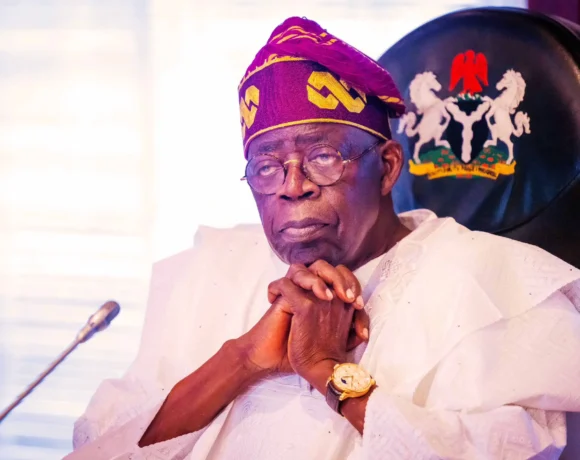
President Tinubu Orders Fast-Tracked Measures to Combat Soaring Food Prices Amid Economic Reforms
President Bola Tinubu’s economic reforms; fuel subsidy cuts, naira floatation, and forex liberalization has battered ordinary Nigerians since 2023. These reforms, meant to heal a corrupt system, instead unleashed a torrent of hardship: the naira plummeted from N460 per dollar to a dizzying N1,505—now hovering at N1,514 in parallel markets—supercharging import costs and igniting food inflation to 22.74% in July, a cruel tax on every meal.
Families, already reeling from 33% headline inflation, watched small shops shutter, remittances evaporate in value, and 13 million more plunge into extreme poverty, swelling the multidimensional misery of 133 million, up from 87 million while elites hoard billions in a glaring theft of equity.

Fuel Subsidy and Naira floation
Floods devoured northern harvests, bandits sealed off farmlands like iron gates, and shoddy storage squandered 40% of produce, catapulting staples into luxuries and condemning 33.1 million—an 80% leap from 2024—to acute hunger, with 1.8 million in emergency straits and over 2 million children stunted by a 34% malnutrition surge in the north. Rural exodus choked urban slums, and dignity eroded in a nation where reforms promised renewal but delivered despair.
President Bola Tinubu directed the Federal Executive Council (FEC) committee on food security on September 11, 2025, to expedite interventions aimed at slashing Nigeria’s skyrocketing food inflation, which has surged past 30% due to floods, insecurity, and supply chain issues. The measures include enhanced agricultural subsidies, improved storage to curb post-harvest losses via the new NiPHaRD initiative, and border reopenings for imports.
If properly implemented, this order; ramping up farm subsidies for seeds and fertilizers, launching NiPHaRD for waste-cutting storage, reopening borders to unleash affordable imports, and securing rural routes against banditry’s stranglehold—could pierce the gloom like a long-awaited harvest moon.
13 million more plunge into extreme poverty, swelling the multidimensional misery of 133 million, up from 87 million while elites hoard billions in a glaring theft of equity
Rice and yams might return to humble tables for slum mothers and fleeing farmers; malnourished toddlers could reclaim growth as prices ease, mirroring August’s timid dip in beans and grains. Rural clans, 75.5% poverty-trapped, might sow safer fields, birthing jobs and abundance.
Finance Minister Wale Edun highlighted that Nigeria met its 2025 revenue target early without new borrowing, crediting non-oil sector growth and investor confidence that boosted market capitalization to N138.8 trillion in the first eight months.
EFCC Grills Sujimoto CEO, Former NNPCL Boss Mele Kyari Over Billions Spent on Moribund Refineries
Mele Kyari’s grilling by Nigeria’s Economic and Financial Crimes Commission (EFCC) on September 10, 2025, unfolds as a high-stakes drama that exposes the rot at the heart of Africa’s oil giant.
Kyari, ousted as NNPCL’s Group Chief Executive Officer in April 2025 amid whispers of underperformance, strode into the EFCC’s Abuja headquarters at 2:15 p.m., unflinching under the glare of scrutiny. For hours, he faced a barrage of questions over the vanishing $7.2 billion; $1.55 billion for Port Harcourt, $740.6 million for Kaduna, and $656.9 million for Warri—poured into “Turn Around Maintenance” (TAM) for Nigeria’s creaking refineries.

Combo photo of EFCC Logo and Mele Kyari
These relics, meant to banish fuel queues and import dependence, stand idle today, mocking the nation’s dreams of energy self-sufficiency while billions swirl into shadowy contracts, over-invoicing, and alleged kickbacks.
Yet, amid the accusations of conspiracy, abuse of office, and money laundering—stemming from a damning April 2025 petition by the Guardian of Democracy and Rule of Law—Kyari’s loyalists paint him as a visionary savior.
Supporters hail his tenure from 2019 as a golden era: transforming NNPC into the commercial NNPCL, declaring the first profit in 44 years in 2020, boosting oil production to 1.8 million barrels per day, resuscitating Port Harcourt and Warri refineries (though the former shuttered again in May 2025 due to losses), curbing oil theft via surveillance tech, and advancing the “Decade of Gas” with pipelines like Ajaokuta-Kaduna-Kano. Even President Tinubu once praised these feats on Kyari’s 60th birthday in January 2025, crediting him with energy security amid subsidy woes.
I’ve done my part; EFCC must do theirs
Nigerians deserve the unvarnished truth from this escalating saga. The EFCC’s evidence arsenal includes frozen Jaiz Bank accounts; two in Kyari’s name, two tied to the Guwori Community Development Foundation for “flood aid”—holding over ₦661 million from dubious sources like phantom book launches, possibly laundered through kin.
A Federal High Court order in August 2025, granted ex parte by Justice Emeka Nwite, locked these for 30 days (renewable), buying time for deeper digs into money trails and insider petitions. The probe, ignited in May 2025, has ensnared over a dozen NNPCL execs, including ex-CFO Umar Ajiya Isa and refinery heads like Abubakar Yar’Adua, uncovering ₦80 billion in suspicious personal pots.
If Kyari’s “evidence” of clean hands holds—as he defiantly declared upon bail, “I’ve done my part; EFCC must do theirs“—prosecution might fizzle. But with selective EFCC pursuits (witness Yahaya Bello’s evasion), the stakes are sky-high: solid trails could jail him, igniting reforms in a sector that’s bled $25 billion on TAM ghosts over decades.
Kyari, who oversaw the sector during subsidy eras, defended expenditures as necessary for energy security but faced scrutiny over delays in operationalizing facilities despite massive investments. This follows similar probes into figures like Sujimoto CEO over N5.7 billion fraud claims. The anti-graft agency also seized illicit drugs worth millions at Onne port.
$7.2 billion; $1.55 billion for Port Harcourt, $740.6 million for Kaduna, and $656.9 million for Warri
Over 95 Lives Lost in Recent Violence in 9 states– 3 Police Officers, 5 Soldiers Among the Dead
The bloodshed began with a deadly ambush at a checkpoint in Kogi State, where gunmen shot dead three police officers on routine duty. In Zamfara, five soldiers were killed during a fierce clash with bandits, underscoring the perilous risks faced by Nigeria’s military in the northwest. These incidents alone claimed eight lives from the security apparatus, as confirmed by police reports.
Further north, Borno State, Boko Haram killed over 60 people, including five soldiers, in an overnight attack on Darul Jamal village. The Nigerian Air Force killed 30 militants in retaliatory strikes. The attack, amid rising jihadist activity, targeted a military base, leaving dozens of civilians and soldiers feared dead in a coordinated assault on remote communities. Eyewitnesses described chaotic scenes of explosions and gunfire, with initial estimates suggesting over 30 casualties, though official tallies are pending amid ongoing rescue operations.
In a separate spree of violence, gunmen rampaged through Katsina, Kaduna, Kwara, Niger, and Plateau states, killing 23 people in ambushes and raids on villages. Victims included farmers and travelers caught in crossfire, with authorities attributing the attacks to armed militias exploiting rural vulnerabilities.

An Illustration of Boko Haram ambushed soldiers
Tragedy also struck the capital, where an official from the Nigeria Security and Civil Defence Corps (NSCDC) was shot dead in Abuja, marking a bold incursion into the heart of the nation’s administrative center. The motive remains unclear, but it has sparked concerns over urban security threats.
Compounding the horror in Katsina, bandits killed six individuals and kidnapped 130 others; mostly women and children over three days in a series of abductions. Survivors recounted harrowing ordeals, with ransom demands already surfacing.
Rights groups decry the escalating insecurity, urging President Bola Tinubu to bolster troop deployments and address underlying issues like poverty and arms proliferation. As families mourn, Nigeria grapples with a security apparatus under siege, raising questions about the effectiveness of ongoing counter-terrorism efforts.
Over 36 Lives Lost in Road Accident, Floods, Diphtheria Outbreak, and Mysterious Death
In a horrific accident at Awomama Bridge in Imo state claims the lives of no fewer than 15 members of the Jehovah’s Witness congregation. The crash, which occurred around 6:45 p.m. on Monday, September 8, happened when a trailer driving against traffic collided with a bus conveying the victims.
The worshippers, from Agwa community in Oguta local government area, were returning from their annual convention in Uli, Anambra State. All the passengers in the bus reportedly died on the spot, and their bodies have been deposited in a morgue.

Imo Accident involving Jehovah witness members
Flooding has compounded the misery, particularly in northern states battered by heavy seasonal rains. In Zaria, Kaduna State, one person was killed when flash floods swept away a mother and her baby, their bodies later recovered downstream. Nearby, two sisters and several others were carried off by surging waters in another Kaduna incident, with at least five confirmed deaths. In Taraba State, vast maize and rice farms were submerged, threatening food security for thousands of farmers amid Nigeria’s ongoing economic strains. “The floods have wiped out our livelihoods; we need urgent relief,” lamented a displaced farmer. Experts link the disasters to climate change and poor urban planning, with the National Emergency Management Agency (NEMA) deploying teams for rescue and aid.
The floods have wiped out our livelihoods; we need urgent relief
Adding to the grim discoveries, a decomposing body was found at the National Assembly gate in Abuja, sparking investigations into possible foul play or suicide. Police have cordoned off the area, with forensic teams working to identify the victim amid public outrage over security lapses at the federal seat of power. “How does this happen right under our noses?” questioned a lawmaker, as CCTV footage is reviewed.
In Niger State, a diphtheria outbreak has claimed 10 lives, primarily children, in a surge that has overwhelmed local health facilities. The bacterial infection, preventable by vaccination, has infected dozens more, with symptoms including sore throats and breathing difficulties. Health Minister Muhammad Pate announced emergency vaccinations and antibiotics distribution, blaming low immunization rates. “We’ve lost a generation to neglect; this must end,” he stated, calling for national awareness campaigns.
Education – NERDC Warns Against Fake Curriculum Lists as JAMB Reveals 2025 UTME Malpractice Surge
The Nigerian Educational Research and Development Council (NERDC) on September 8, 2025, urged reliance on its official curriculum list signed by Executive Secretary Professor Salisu Shehu, dismissing circulating fakes amid the revised basic and senior secondary frameworks.
Implementation starts in the 2025/2026 session, with sensitization and teacher training underway. Meanwhile, JAMB’s September 9 report exposed rampant 2025 UTME cheating, including 4,251 fingerprint blending cases and 192 AI impersonations, invalidating thousands of results and eroding credibility.
4,251 fingerprint blending cases and 192 AI impersonations, invalidating thousands of results
Registrar Professor Ishaq Oloyede pledged biometric enhancements and tech partnerships. The Federal Government ordered mapping of out-of-school children, while NERDC stressed official curricula. Stakeholders demand reforms like teacher training and infrastructure to address youth bulge. Unchecked fraud risks producing an uncompetitive generation; prosecutions are urged. This scandal amplifies concerns over 10.5 million out-of-school children, with calls for holistic changes to align education with global standards.
Low Turnout Mars School Resumption Across Nigeria
Schools reopened nationwide, but classrooms remain eerily empty due to low student turnout. Economic hardship, fuel price hikes, and delayed salaries deterred parents, with some schools reporting under 30% attendance. Education officials urge intervention to address rising costs and restore confidence.
‘You Remain Suspended’ – Senate Barred Natasha Akpoti-Uduaghan from Resuming After 6 Months
The Nigerian Senate has rebuffed Senator Natasha Akpoti-Uduaghan’s bid to resume duties, declaring her six-month suspension intact despite its expiration. The Kogi Central lawmaker, suspended on March 6 for alleged misconduct and “unruly behavior,” faces ongoing legal battles tied to her sexual harassment claims against Senate President Godswill Akpabio, whom she accused of advances – allegations he denies.

Senator Natasha Akpoti-Uduaghan
Akpoti-Uduaghan, one of only four female senators in the 109-member chamber, argued her suspension violated court orders and was retaliatory. A federal high court ruling in July urged her recall, but the Senate appealed, insisting the matter is sub judice. In a September 4 letter from Acting Clerk Yahaya Danzaria, she was informed: “You remain suspended” until judicial resolution, barring her from the National Assembly premises, salary, and aides.
Akpoti-Uduaghan vows to fight on, stating, “My legitimacy comes from the people.” As appeals loom, the saga underscores deep gender inequities in Nigerian politics, with calls for international intervention growing louder.
Apple Unveils iPhone 17 Air Amid AI Race, Tariff Pressures
Apple unveiled its iPhone 17 lineup on Tuesday, September 9, 2025, introducing the ultra-slim iPhone 17 Air as its thinnest smartphone ever at just 5.6mm thick. The Silicon Valley giant’s annual “Awe-Dropping” event at the Steve Jobs Theater showcased a bold attempt to reinvigorate its brand amid fierce competition in the generative AI race and economic pressures from U.S. tariff policies.

Newly unveiled iphone 17 pro max
The iPhone 17 Air, priced at $999, features the powerful A19 Pro chip—Apple’s most advanced iPhone processor to date—and boasts up to 40 hours of video playback with all-day battery life. CEO Tim Cook hailed the device as “a total game changer,” positioning its sleek, titanium-and-Ceramic-Shield design as a premium selling point to spark a new wave of upgrades. The Air joins the iPhone 17, iPhone 17 Pro, and iPhone 17 Pro Max, with prices starting at $799, $1,099, and $1,199, respectively, unchanged from last year’s models despite rising production costs. Surprisingly, Nigerian vendors put out the price starting at 4.2 million naira, citing shipping costs and other levies.
Gen Z Fury Engulfs Nepal: Parliament Ablaze, PM Resigns, Ex-PM’s Wife Killed
9 youth died in the Gen_Z protest in Nepal against socialist government ban on 26 social media apps including Facebook, youtube and @X .
Youths demand complete change of leadership in the country most deaths are due to police firing. #Nepal #genznepal #genzie pic.twitter.com/XEuh6yk8ts
— Tulsi For President (@TulsiPotus) September 8, 2025
Nepal’s parliament was set ablaze by Gen Z protesters, forcing Prime Minister KP Sharma Oli to resign amid a fiery anti-corruption uprising. Triggered by a ban on 26 social media platforms, seen as censorship, the protests channeled rage against corruption, nepotism, and a 20.8% youth unemployment rate. Clashes left 19 dead, hundreds injured, and 300 inmates escaped from western jails. Parliament, Singha Durbar, and leaders’ homes were torched, with the wife of former Prime Minister Pushpa Kamal Dahal burnt to death. Politicians fled via helicopters from Singha Durbar. No clear sponsors emerged, but viral “Nepo Kids” campaigns fueled outrage. The UN condemned lethal force as Nepal’s youth demand systemic change.
Read Also: Gov Lawal: How Banditry Can End in 2 Months, 56 Lives Lost to Accidents, More in Weekly Roundup
Author

Sign up for The Insight Newsletter
Get in-depth, research and data-based interpretative reports from around Nigeria.