US Congress Bill to Monitor How Nigeria Combats Terrorism

…Bill Targets Alleged Christian Persecution with Reporting Mandates, Potential Sanctions, and Terrorist Designations
Key Points:
- The bill requires the U.S. Secretary of State to report on American efforts to combat religious persecution.
- It urges sanctions, visa bans, and asset freezes on Rabiu Musa Kwankwaso and MACBAN over alleged roles in persecution.
- The legislation seeks to designate Fulani ethnic militias as terrorists and highlights alleged mass atrocities against Nigerian Christians.
- It assesses Nigeria’s compliance with religious-freedom laws and government actions taken.
- It evaluates risks tied to U.S. assistance and recommends steps to halt persecution.
By Emmanuel Kwada
Republican lawmakers in the U.S. House of Representatives have introduced bipartisan-backed legislation aimed at increasing scrutiny of religious persecution in Nigeria, particularly violence said to target Christians in the Middle Belt and northern regions.
The Nigeria Religious Freedom and Accountability Act of 2026 (H.R. 7457), introduced on February 10, 2026, requires detailed annual reporting from the U.S. Secretary of State and calls for stronger accountability measures, including possible sanctions and terrorist designations for groups linked to the attacks.

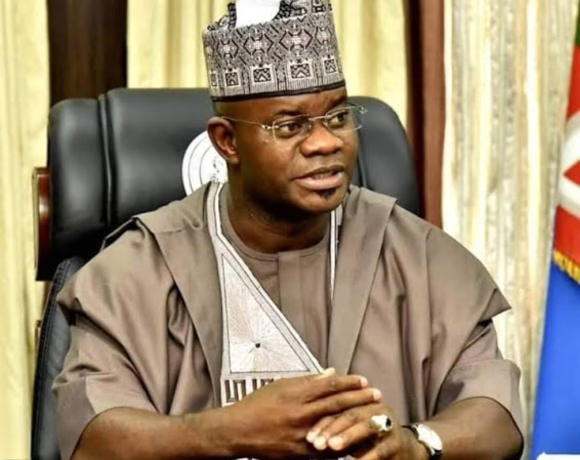
Credit: Online
Sponsored by Rep. Riley Moore (R-WV) and co-sponsored by Rep. Chris Smith (R-NJ), Chairman of the House Foreign Affairs Subcommittee on Africa, the bill has secured early backing from key lawmakers, including House Foreign Affairs Committee Chairman Brian Mast (R-FL), House Appropriations Committee Chairman Tom Cole (R-OK), Appropriations Vice Chairman Mario Diaz-Balart (R-FL), and Foreign Affairs Subcommittee Chairman Bill Huizenga (R-MI).
Supporters cite patterns of violence such as mass killings, kidnappings, church destruction, forced displacement, and property attacks attributed to Fulani ethnic militias and related Islamist extremist groups.
They reference estimates suggesting between 50,000 and 125,000 Christians were killed from 2009 to 2025, alongside thousands of churches damaged or destroyed. Specific incidents in Benue and Plateau states between 2023 and 2025 reportedly led to large-scale deaths and displacement.
Strong signal of American solidarity with persecuted Christians.
The bill argues that the Nigerian government has failed to adequately prevent or prosecute such acts, citing impunity, enforcement of blasphemy laws, and the application of certain Sharia provisions said to disproportionately affect religious minorities. It builds on prior U.S. actions, including Nigeria’s redesignation as a Country of Particular Concern (CPC) under the International Religious Freedom Act (IRFA), and seeks to ensure U.S. aid does not inadvertently enable persecution.
Rep. Moore described the legislation as a “strong signal” of American solidarity with persecuted Christians. Rep. Smith said inaction by both Nigerian and U.S. authorities emboldens extremist groups such as Boko Haram and armed militias, arguing that the United States must lead global efforts to protect religious freedom.

A church building burnt by Boko Haram in Garkida, Adamawa State
Although the bill does not immediately impose new sanctions, it establishes extensive reporting and “sense of Congress” directives. The Secretary of State must submit detailed assessments to congressional committees on U.S. and Nigerian efforts to combat persecution, including compliance with IRFA standards such as preventing attacks, prosecuting perpetrators, repealing blasphemy laws, protecting minorities, and supporting the safe return of displaced persons.
It also calls for a review of past, current, and planned U.S. aid to Nigeria to determine whether assistance could enable persecution. The legislation further requires reporting on joint humanitarian support to displaced Christians through faith-based organisations and NGOs, including funding levels, recipients, assistance provided, and outcomes.
The bill urges consideration of Global Magnitsky Act sanctions — including visa bans and asset freezes — against individuals and entities such as former Kano State Governor Rabiu Musa Kwankwaso, the Miyetti Allah Cattle Breeders Association of Nigeria (MACBAN), Miyetti Allah Kautal Hore, and Fulani nomadic militias. It also directs the State Department to evaluate whether Fulani ethnic militias meet the criteria for designation as a Foreign Terrorist Organization (FTO).
If enacted, the legislation could increase diplomatic pressure on Nigeria, influence U.S. foreign-aid decisions, and potentially lay the groundwork for sanctions or terrorist designations, possibly straining bilateral security and humanitarian cooperation.
Necessary step to address escalating violence and protect vulnerable communities.
Reactions in Nigeria
The proposal has generated significant controversy in Nigeria, especially over the inclusion of former Kano governor and NNPP leader Rabiu Musa Kwankwaso among those recommended for targeted sanctions. Groups linked to Kwankwaso, including the Kwankwasiyya Movement and the New Nigeria Peoples Party (NNPP), described the allegations as baseless, politically motivated, and an intrusion into Nigeria’s internal affairs, demanding his removal from the bill.
The Kwankwasiyya Movement argued that the claims lack credibility and noted that Kwankwaso did not initiate full criminal Sharia implementation in Kano and even faced electoral backlash from religious hardliners for his perceived reluctance. NNPP officials similarly dismissed the allegations as contrived and called for proper investigation before legislative action.
Commentators have echoed these concerns. Journalist Jaafar Jaafar said Kwankwaso’s “only offence” appeared to be his criticism of external pressure on Nigeria, portraying him as moderate rather than extremist. Security analyst Bulama Bukarti described the inclusion of Kwankwaso as erroneous and cautioned against relying on unverified claims. Former Senator Shehu Sani maintained that violent groups deserve terrorist designation but urged careful research, noting Kwankwaso has never publicly supported religious violence.
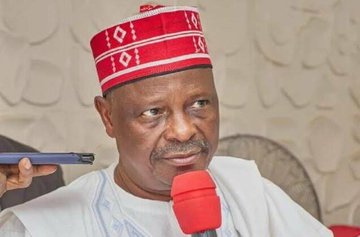
Sen Rabiu Musa Kwankwaso
Some observers also stressed that certain leaders of Miyetti Allah and Kautal Hore have themselves been victims of banditry and terrorism, and warned that any legislation with global implications requires thorough analysis.
However, advocacy organisations such as the End the Genocide Against Nigerian Christians Coalition (convened by Save Nigeria Group U.S.A.) welcomed the bill, calling it a necessary step to address escalating violence and protect vulnerable communities.
The bill, now referred to the House Committee on Foreign Affairs, remains in its early stages. Analysts note that its reporting-focused approach may allow quicker progress than earlier, more punitive proposals, while still building momentum for tougher measures.
Nigerian commentators have also raised sovereignty concerns, arguing that many farmer-herder clashes are driven by land, resources, and climate pressures rather than purely religious motives, and warning that targeting herder associations such as MACBAN could inflame tensions.
For full text and updates of the bill as listed on congress.gov (H.R. 7457, 119th Congress).
Smith, Moore Introduce the Nigeria Religious Freedom and Accountability Act of 2026
February 10, 2026
Press Release
Washington, D.C. – Reps. Riley Moore (R-WV) and Chris Smith (R-NJ), Chairman of the House Foreign Affairs Africa Subcommittee, along with leading lawmakers on the House Appropriations Committee and House Foreign Affairs Committee, introduced the Nigeria Religious Freedom and Accountability Act of 2026 (HR 7457), today. The bill will require the U.S. Secretary of State to compile and submit to Congress a comprehensive report on U.S. efforts to address the ongoing religious persecution and mass atrocities against Christians in Nigeria.
Cosponsors of the legislation include House Appropriations Committee Chairman Tom Cole (R-OK), House Foreign Affairs Committee Chairman Brian Mast (R-FL), Appropriations Subcommittee on National Security and Related Programs Chairman Mario Diaz-Balart (R-FL), and Foreign Affairs South and East Asia Subcommittee Chairman Bill Huizenga (R-MI).
The Nigeria Religious Freedom and Accountability Act of 2026 comes in the wake of extensive focus on the issue from Congress and President Trump, who has been leading the global charge to end the persecution of our brothers and sisters in Christ in Nigeria.
“For years, Christians in Nigeria have faced unspeakable violence—churches burned, villages destroyed, families slaughtered—while the global community looked away. As part of the investigation President Trump asked me to lead, I visited Nigeria and witnessed firsthand the horrors our brothers and sisters in Christ face and saw the security challenges Nigeria faces,” stated Rep. Moore, the author of legislation to condemn the persecution of Christians in Nigeria and support President Trump’s CPC designation.
“That is why I am proud to introduce the Nigeria Religious Freedom and Accountability Act of 2026 with Representative Chris Smith. This legislation makes clear that the United States stands with our persecuted brothers and sisters in Christ and seeks to help Nigeria address its many challenges,” said Rep. Moore.
“I applaud the Nigerian government for working in coordination and cooperation with the Trump Administration to address the security challenges throughout the country. I stand ready to continue working to deepen and strengthen our relationship with Nigeria, as we work to save Christian lives,” Rep. Moore continued.
“The Nigerian government’s blatant denial of the religious persecution occurring within its borders has only enabled the religious-based violence in the country to fester, with Christian deaths and church attacks reaching unprecedented numbers,” said Rep. Smith, who has chaired 13 congressional hearings on the religious persecution crisis in Nigeria.
“Now that President Trump has rightly redesignated Nigeria a ‘Country of Particular Concern’ (CPC), the United States has a responsibility to do its due diligence in ensuring that the Nigerian government is taking the proper steps to address and punish the systemic violence against Christians and non-radical Muslims by Islamist extremists, such as Boko Haram and Fulani terrorists,” Rep. Smith added.
“Inaction on the parts of both the Nigerian and U.S. governments only emboldens these radical Islamist thugs to inflict even more misery, suffering, and death upon Christians and non-radical Muslims in Nigeria. That is why it is paramount that the United States remain steadfast in its mission to promote and protect religious freedoms throughout the globe—by ensuring that we are doing all that we can to end this crisis, we set an important example for the rest of the international community,” concluded Rep. Smith.
“The free world cannot stand by as Christians face mass murders, kidnappings and brutal assaults at the hands of terrorist thugs and armed militias in Nigeria. The Nigerian government must do their part to eliminate the scourge of religious persecution plaguing the country,” said House Foreign Affairs Committee Chairman Brian Mast. “This bill aligns with President Trump’s steps to hold them accountable and signal to the world that the U.S. stands firm in defending religious freedom.”
“Defending religious liberty in Nigeria and worldwide is both a moral duty and a vital American interest. Moreover, this bill, as well as President Trump’s ongoing efforts, does just that,” stated House Appropriations Committee Chairman Tom Cole. “The Nigeria Religious Freedom and Accountability Act of 2026 makes it clear: religious persecution will not be tolerated.”
The new Smith-Moore bill requires the U.S. Secretary of State to issue a report detailing the following components:
- An assessment of Nigeria’s compliance with the International Religious Freedom Act, including specific actions taken, or not taken, by the Government of Nigeria to prevent persecution, prosecute perpetrators, repeal blasphemy laws, protect vulnerable communities, and facilitate the safe return of internally displaced persons.
- Identification of all individuals and entities sanctioned, or under consideration for sanction, under the Global Magnitsky Human Rights Accountability Act or the Entities of Particular Concern list.
- A description of co-investments and collaborative efforts between the Governments of Nigeria and the U.S. to provide and deliver humanitarian assistance to Christians displaced by the attacks from Fulani-ethnic militias, through faith-based or nongovernmental partners, including amounts, recipients, type of assistance provided, and measurable outcomes.
- An evaluation and description of historical, ongoing, and planned U.S. security assistance to Nigeria, and a comprehensive assessment of whether such assistance risks enabling or exacerbating religious persecution.
- An investigation into whether the Nigerian government is taking appropriate steps to cease enforcement of blasphemy laws, and to look into instances of non-Muslims, Muslims, and dissenters being subjected to Sharia law or blasphemy laws.
- An assessment of internally displaced persons (IDP) conditions, including safety, humanitarian needs, and prospects for return.
- Recommendations for further executive actions or congressional authority deemed necessary and most helpful to halt the religious persecution and mass atrocities occurring in Nigeria.
- An evaluation of any steps taken by the Government of Nigeria during the reporting period to address religious persecution, dismantle extremist networks, prosecute attackers, reform security forces, or improve protection for at-risk communities.
Read Also: Lives of Rural Villagers Hold Little Value to Authorities in Nigeria – American Missionary
Author

Sign up for The Insight Newsletter
Get in-depth, research and data-based interpretative reports from around Nigeria.