
Nigerian Christians Face Killings, Forced Conversion, Forced Marriage – UN Report

By Emmanuel Kwada
The Office of the United Nations High Commissioner for Human Rights (OHCHR) has raised fresh concerns over what it describes as credible reports of killings, abductions, sexual violence, forced conversions, and forced marriages targeting Christian and other religious minority communities in Nigeria, particularly across the country’s northern and Middle Belt regions.
In a statement issued on Monday, a group of United Nations human rights experts warned that worsening insecurity and persistent impunity have created conditions that allow armed extremist groups and violent actors to operate with devastating consequences for civilians.
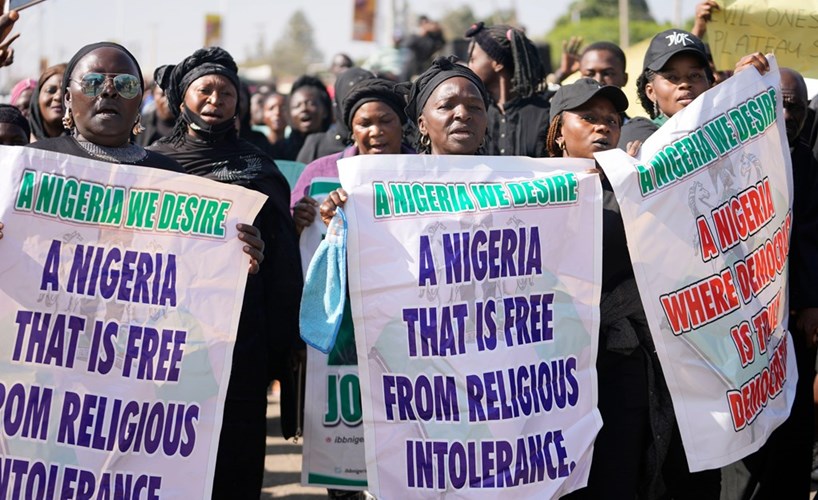
File photo: A march takes place in January 2024, after attacks on Christians in Plateau state, north-central Nigeria
The experts said testimonies received by the UN painted a disturbing picture of fear, trauma, coercion, and abandonment, especially among women and girls from Christian minority communities.
“These reports are deeply troubling,” the experts stated. “The deteriorating security situation in northern Nigeria and the Middle Belt has created an environment in which armed extremist groups, including Boko Haram, Islamic State West Africa Province (ISWAP), and radicalised individuals involved in farmer-herder conflicts continue to operate with devastating consequences for civilians.”
The UN warned that violence against Christians and other religious minorities remains widespread in parts of northern Nigeria, citing attacks on villages and churches, mass displacement, mob violence linked to blasphemy accusations, and insecurity in camps housing internally displaced persons.
We are particularly alarmed at the very specific and heightened risks of discrimination, violence and exploitation that Christian women and girls are exposed to.
Women and Girls Face Greater Risks
Particularly alarming, according to the UN experts, are the dangers faced by Christian women and girls who are reportedly subjected to abductions, sexual violence, forced conversion, child marriage, and other forms of exploitation.
“We are particularly alarmed at the very specific and heightened risks of discrimination, violence and exploitation that Christian women and girls are exposed to,” the experts said.
According to the report, some victims who resisted forced marriages or conversion attempts were allegedly threatened, assaulted, disappeared, or killed.
The experts cited several cases presented to the Nigerian government, including the disappearance of girls abducted from a church in Borno State, the alleged forced conversion and child marriage of a 13-year-old girl in Bauchi State, and a brutal attack on a 16-year-old Christian girl whose hand was reportedly severed after her family rejected a marriage proposal from militants.
Pattern of Violence
The UN noted that the incidents highlighted are not isolated events but form part of a broader pattern of violence affecting minority communities in parts of northern Nigeria.

File photo: A church building burnt by Boko Haram in Garkida, Adamawa State
For example, communities in states such as Borno, Kaduna, Plateau, Benue, and parts of Bauchi have repeatedly experienced attacks by armed groups, leading to deaths, destruction of homes and places of worship, and large-scale displacement.
In several reported incidents over the years, entire villages have been attacked at night, forcing residents to flee. Families have been separated during attacks, with women and children often among the most vulnerable victims.
The report also highlighted concerns that some displaced women and girls are reportedly being coerced into sexual relationships or exploitation in exchange for food, shelter, or basic necessities in displacement camps.
Impunity for these crimes only fuels further violence.
To avoid persecution, some women allegedly conceal their religious identity or adopt different forms of dress, including wearing hijabs, to blend into communities controlled by armed groups.
Human Rights Violations
The OHCHR warned that if verified, the allegations could constitute serious violations of international human rights law.
These include violations of the right to life, liberty, security, freedom of religion or belief, protection from torture, enforced disappearance, slavery, human trafficking, and violations of the rights of women and children.
The experts stressed that the continued failure to investigate and prosecute perpetrators risks encouraging further violence.
“Impunity for these crimes only fuels further violence,” the experts warned.
The UN experts called on Nigerian authorities to take immediate and concrete measures to protect vulnerable communities, secure the release of abducted women and girls, conduct independent and transparent investigations, and ensure perpetrators are brought to justice.
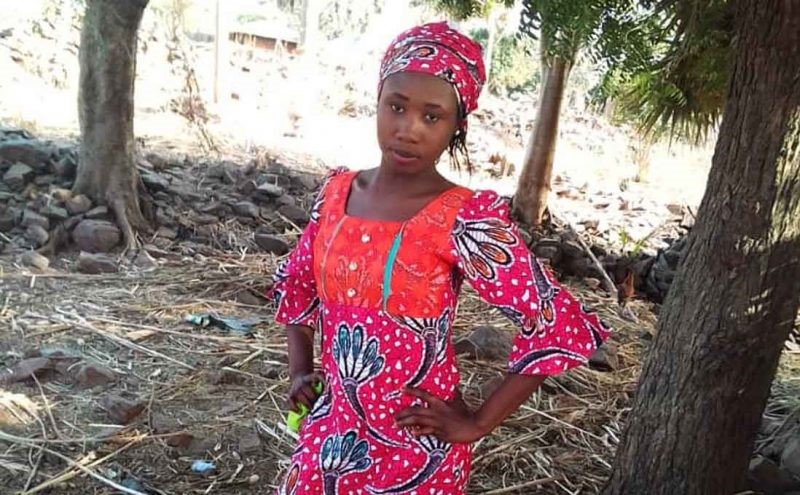
Leah Sharibu: Jihadists have enslaved this Christian girl who refused to convert to Islam.
They also urged authorities to provide survivors with rehabilitation, psychosocial support, compensation, and other forms of assistance to help them rebuild their lives.
The experts emphasized that ensuring accountability is essential not only for justice but also for preventing future abuses.
The statement adds to growing international concern over insecurity in Nigeria, where armed insurgency, banditry, communal violence, and kidnappings continue to threaten lives and livelihoods across several regions.
Human rights advocates have repeatedly called for stronger security measures, improved protection for vulnerable communities, and greater accountability for perpetrators of violence.
While Nigerian authorities have consistently maintained that efforts are ongoing to tackle insecurity and protect citizens regardless of religion or ethnicity, the latest UN intervention underscores the scale of the challenge and the urgent need for effective action.
Read Also: CAN Declares June 14 as ‘Black Sunday’ to Remember Victims of Terror, Banditry
Author

Sign up for The Insight Newsletter
Get in-depth, research and data-based interpretative reports from around Nigeria.