
2027 Elections: My fears for Professor Amupitan

The eyes of my centenarian father-in-law always sparked with excitement, his heart warm with happiness every time I travelled from Abuja to our village and walked into his serene premises. Not because I took a lorryload of material gifts or showered him with Naira notes. Rather, it was because each visit enabled him to give me neither gold nor silver gifts. They were opportunities for him to respond to my historical and cultural enquiries.
When asked why our village remains backwards, the old man reached into his bag of wisdom and revealed a startling truth: “A society that has never tasted the fire of warfare will not advance quickly. Conflict, though destructive, often ushers in renewal; from the ashes, communities are rebuilt with greater strength and finer design.”
He spoke with conviction, weaving examples like a seasoned storyteller. One by one, he pointed to nations and societies that had been shattered—whether by war or natural disaster—only to rise again, stronger and more developed than before. His words carried the weight of history: destruction as a cruel teacher, and rebuilding as its inevitable lesson.
Each time we gathered by the fireside—much to the envy of the younger grandchildren—my father-in-law would summon me to journey with his memory into the distant past. He spoke of the day enemy forces tried to invade our village, when the land seemed to transform into a vast ocean of menace. He recalled how an Attah Igala, by sheer word of mouth, conjured a bridge across a river that had swallowed his horse.
The sun blazed fiercely, but I insisted I must cast my vote. We told stories—old and new—until our words ran dry. Yet no ballot papers arrived.
He told of fearless women under colonial rule, who rose against cruel district heads who tormented their husbands in the name of tax collection. Among them was my own paternal grandmother, whose defiance became legend.
His stories wandered through the labyrinth of taboos: husbands and wives forbidden to share the same roof, yet dwelling within the same compound; strange idols that spoke commands to their subjects; warriors who hid their souls in hollow trees while their bodies marched to war; hunters who wrestled and defeated mighty pythons; men who appeared suddenly wherever their names were slandered.
He unveiled the backstory of every clan in our village—those marked by peculiar genetics, like long teeth or towering height; those cursed by ancestral misdeeds; and families from which marriage was either forbidden or encouraged. Each tale was a thread, weaving together the tapestry of our people’s history.
The very last chance I had to draw from his deep reservoir of wisdom came in 2019. Though weakened by age and its burdens, he still managed to share fresh stories with me. The final one was about a recent election, told with a mocking tone that revealed his disdain for the clownish unseriousness of today’s politicians.
In colonial times, elections here were transparent. Winners were known locally, contestants became household names, and every voter knew who won or lost
“During the last governorship election, we all queued at the marketplace to vote,” he began. “From morning till afternoon, we waited for electoral officers. Many abandoned their farms. The sun blazed fiercely, but I insisted I must cast my vote. We told stories—old and new—until our words ran dry. Yet no ballot papers arrived. As the sun receded and our shadows stretched long, we returned home. Later that evening, those who listened to the radio said the election results from our village had been announced.”
“That’s disappointing,” I remarked.
He cleared his throat. “That’s not the real issue. The results were declared in Lokoja, and the APC was said to have won.”
“That’s shameful,” I interjected.
“The white man would never do such a thing,” he continued. “In colonial times, elections here were transparent. Winners were known locally, contestants became household names, and every voter knew who won or lost. But now elections are a charade. How can results be declared where no one voted? How did they conjure those figures? The so-called winners don’t know us, and we don’t know them. What will they do for us? They owe us nothing, since they never earned our votes. The colonial officials had their biases—they favoured the Hausa-Fulani party—but at least they ensured we cast ballots for candidates of our choice.”
He paused, then added gravely: “Today’s system is worse. A politician who gains office without the people’s votes will never care for their needs. He will not be accountable. That is the danger in what electoral officials are doing now.”
That conversation—where my father-in-law contrasted the near-transparency of colonial elections with the grotesque mockery of today’s democracy—felt like a farewell tale. It has remained lodged in my mind ever since, impossible to shake from my imagination.

APC members during the primary elections in Katsina State recently
It’s been many years now since we parted; he is now on the other side of the divide. Nigeria’s elections have never been credible in spite of several amendments to the Electoral Act and the many adjustments made by the Independent National Electoral Commission (INEC) to its election guidelines.
As I reflect on the situation, I recollect the Broken Windows Theory in Criminology, which says an unrepaired “broken window” signals that no one cares, leading to more vandalism and eventually more severe crimes. Perhaps, the first time the broken window in our electoral process was noticed was in 2003, when Jimmy Carter, who led the American National Democratic Institute (NDI)/Carter Centre’s observer mission during Nigeria’s 2003 elections.
The former American president said the elections were “marred by widespread fraud and violence and did not meet minimum international standards for democratic elections.” Those were the early days of the renewed democracy in Nigeria in 1999. Four years later, the window had been broken and left unrepaired in spite of the amendments to our electoral laws.
Ironically, Nigerians in our election value chain who should protect the letter and spirit of the amendments facilitate the abuse of the law. The police are cast as guardians of the ballot to shield our democracy’s fragile flame. Yet too often, they become the stagehands of fraud—thumbprinting ballots in backrooms; they provide cover for contestants who manipulate the process. The very referees of the contest, the electoral umpire, accepted dubious election results as authentic. Professors, summoned to play roles in elections for their supposed integrity, announce fictitious figures that mock arithmetic and insult reason.
Politicians, stripped of vision, no longer bother to craft manifestos to sell to the people. Rather, they entice the people to trade their votes like livestock in a market. Opponents’ agents were bribed into silence. The Electoral Act itself, a covenant etched in law, declares that votes exceeding accredited voters must be annulled. Yet INEC and the courts, custodians of this covenant, betray it—handing power not to those chosen by ballots, but to those who are quick in cooking up figures.
In the recent All Progressives Congress (APC) primary elections, the hole created in the electoral window broken in 2003 has enlarged, creating easy passage for criminals to crawl into power and cart away our commonwealth. Sitting governors became the personification of the will of the people; they imposed National Assembly, House of Assembly and, in some cases, governorship candidates on their party members.
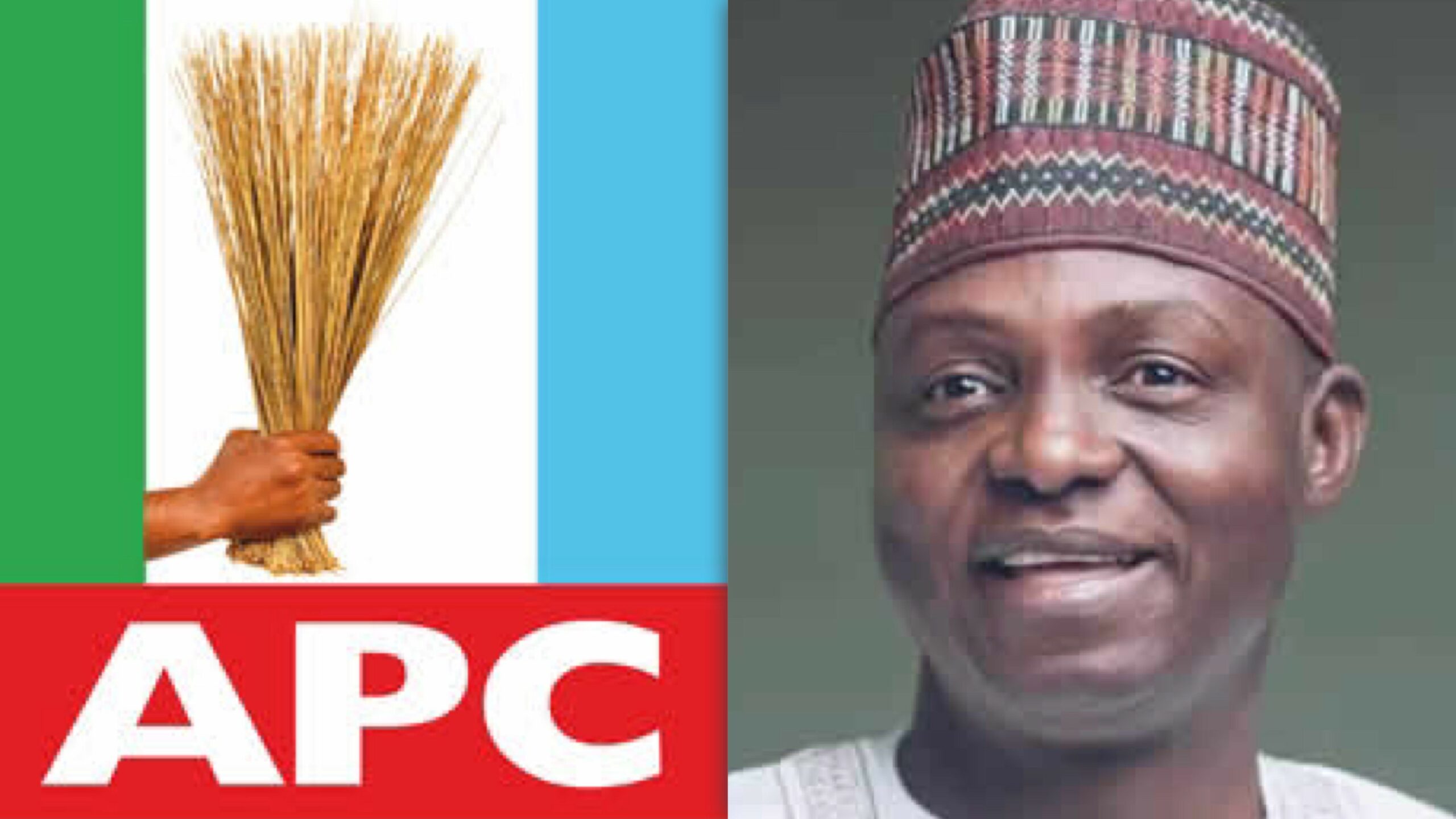
The current National Chairman of Nigeria’s ruling All Progressives Congress (APC), Professor Nentawe Yilwatda
After strong-willed party members thwarted the imposition game, primary elections were conducted to choose candidates. But they were as laughable as the election my father-in-law referred to in his last conversation with me. Across several constituencies, party leaders sidelined aspirants by imposing consensus candidates, undermining the democratic essence of primaries and sparking protests.
Video clips from those elections show how party officials who counted members on queues cast integrity into the pit. In the process of counting, they moved from say, 15 to count 50, then jumped to 100, to 500, to thousands. Vote tallies jumped in “geometric progression”—from single digits to hundreds in a matter of minutes, exposing blatant manipulation of figures. Shamelessly, they produced numbers not backed up by evidence in the population on queues. In some places, there were ghost elections: no accreditation officers appeared, no ballot papers were distributed, and no voting occurred. Yet results were later announced as if elections had taken place.
In Lagos, supporters of certain aspirants allegedly forced rival delegates out of polling centres, preventing them from participating freely. In contravention of the Electoral Act 2026, official APC membership cards were not used in some centres, raising doubts about the authenticity of delegates and the transparency of the process. The primary elections were an opportunity for parties to demonstrate unity, cohesion and internal democracy. However, what transpired was a dubious joke; totally discouraging, to say the least.
For the 2027 elections to truly reflect the will of the people, INEC must rise as the uncompromising guardian of democracy.
From what Nigerians have seen in the primary elections, it is feared that votes may not count in the 2027 elections, unless Professor Joash Amupitan stands his ground. He has told Nigerians on a few occasions that votes must count next year; he must not falter, for the institution he leads is the final dam holding back the floodwaters of chaos. If votes do not count, then elections become nothing more than theatre.
For the 2027 elections to truly reflect the will of the people, INEC must rise as the uncompromising guardian of democracy. First, it must ensure strict adherence to the Electoral Act—no votes should exceed accredited voters, and any irregularities must be swiftly cancelled. Technology must be deployed transparently, with real-time transmission of results from polling units to prevent manipulation. Security agencies must be kept neutral, protecting voters rather than shielding fraud.
INEC must also train and monitor its officials rigorously, ensuring they resist bribery and intimidation. Above all, the commission must insist that every ballot cast is sacred, counted, and respected. If INEC falters, elections will remain a charade; but if it stands firm, it will be the bridge between Nigeria’s democratic aspirations and reality. The people’s trust rests on its shoulders—INEC must not let Nigerians down. The window of our electoral democracy is broken, but a broken window can be repaired or replaced. Now, the ball is in Professor Amupitan’s court; he has to score a goal to have his name written on our hearts as a credible electoral umpire.

Former Vice President Atiku Abubakar
Author

Sign up for The Insight Newsletter
Get in-depth, research and data-based interpretative reports from around Nigeria.


