
2027: Vote Clean Energy – Abuja Campaigners Tell Nigerians as 86 Million Remain Without Electricity
By Emmanuel Kwada
Clean energy campaigners have urged Nigerians to make access to reliable electricity a major consideration in the 2027 general elections, warning that more than 86 million people remain without access to electricity.
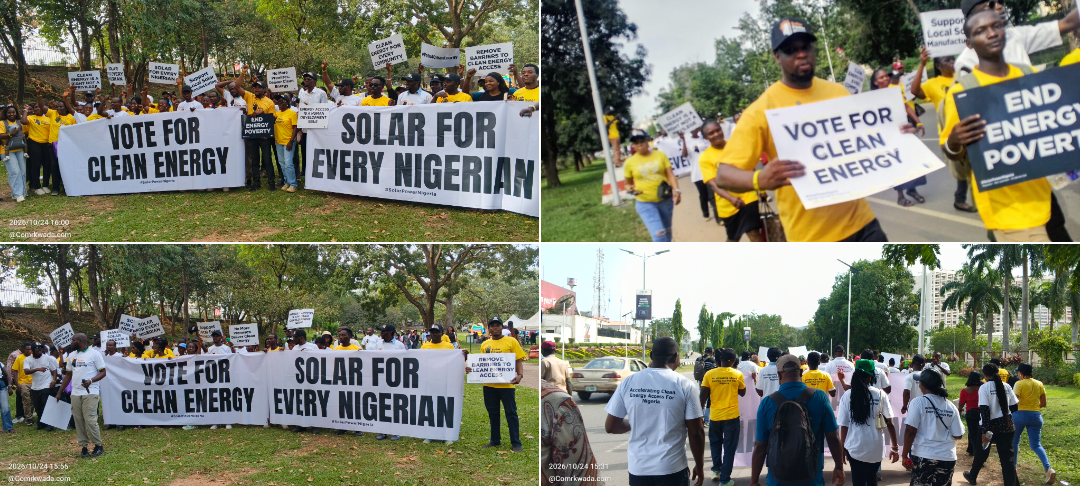
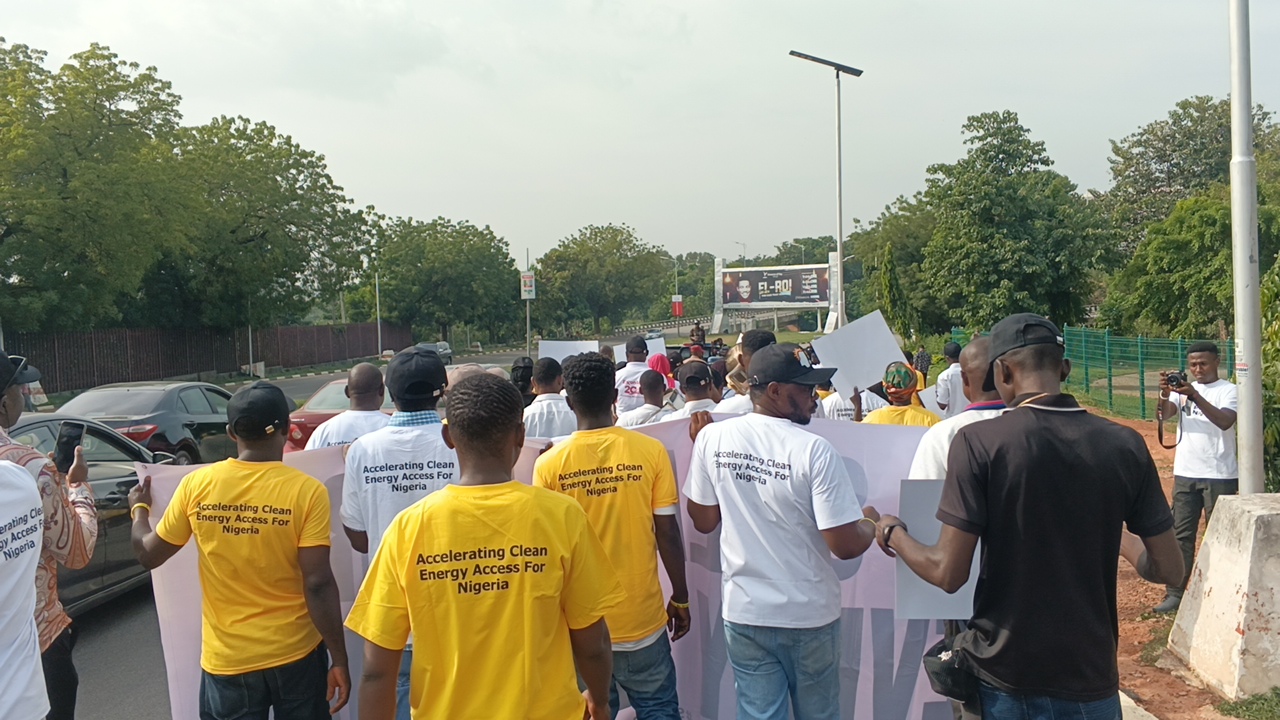
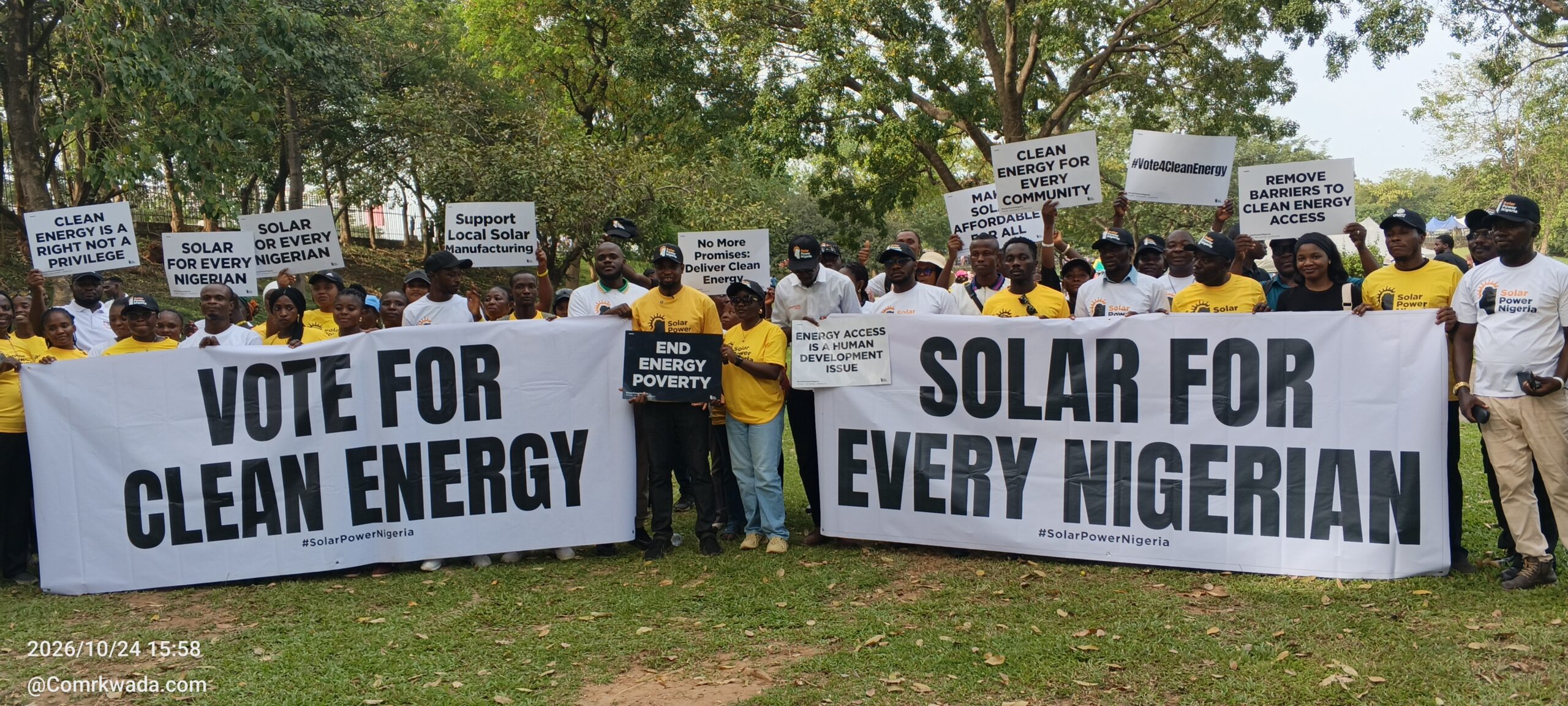
The campaigners made the call during a solidarity march in Abuja on Saturday, October 24, 2026, organised by the Solar Power Nigeria Coalition to demand greater political commitment to renewable energy and universal electricity access.
Nigeria’s electricity deficit remained a major obstacle to development despite 66 years of independence.
Marching alongside young people and clean energy advocates, the protesters carried a message urging Nigerians to hold political candidates accountable for their plans to address the country’s persistent electricity challenges.
Under the campaign slogan, “Power the People: Vote for Clean Energy,” they called on Nigerians to demand clear commitments from presidential, governorship, National Assembly and local government candidates on how they intend to provide electricity to underserved communities.
Joseph Ibrahim, Nigeria Campaign Director of the Secure Energy Project, said Nigeria’s electricity deficit remained a major obstacle to development despite 66 years of independence.
He noted that the national grid currently generates approximately 5,000 megawatts of electricity, which is inadequate for a population exceeding 200 million.
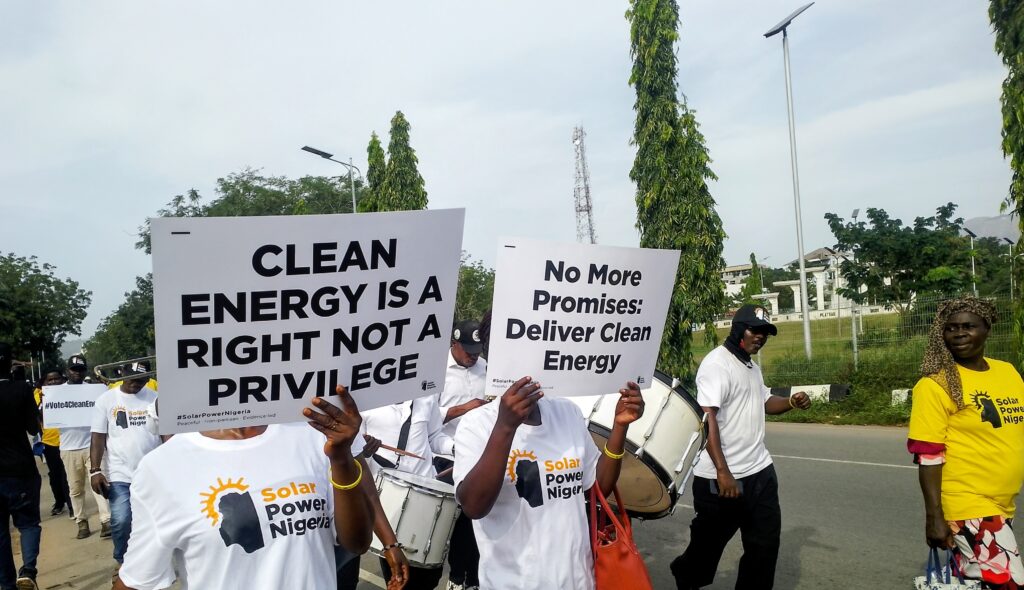
Young Nigerians march in Abuja today with message: “Power The People, Vote for Clean Energy”
According to him, expanding solar energy and deploying mini-grids could help bridge the gap faster than relying exclusively on extending the national grid to underserved communities.
“Election after election, we have not asked those seeking office how they plan to give us power. This time must be different,” Ibrahim said.
He urged Nigerians to ask candidates three fundamental questions: how many households they intend to connect to electricity, when they will deliver on their promises, and how they intend to finance the projects.
Ibrahim also called on state governments to take advantage of the Electricity Act 2023, which provides a framework for states to establish and regulate their electricity markets.
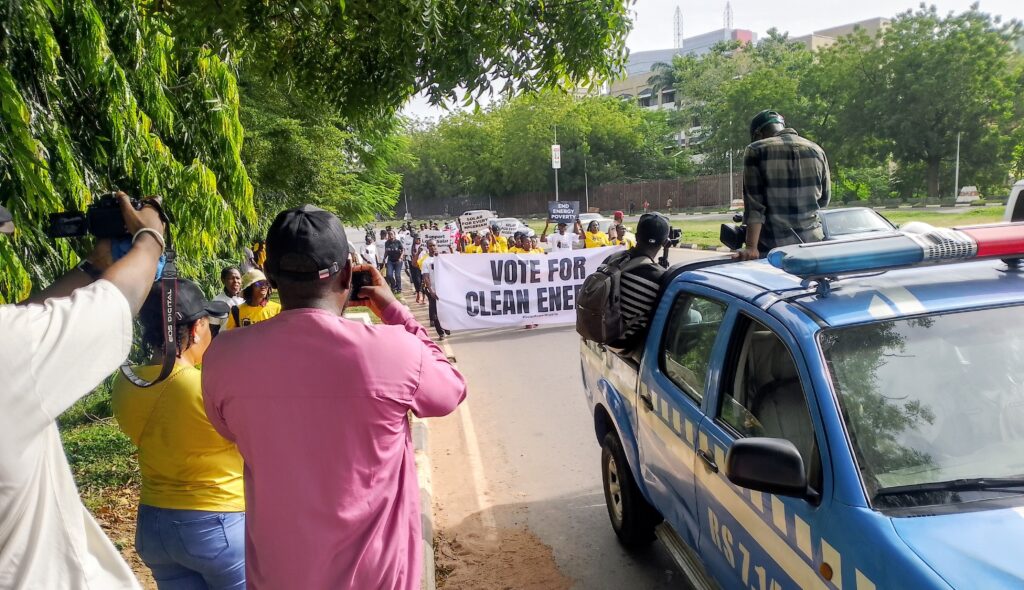
Solar Power Nigeria campaigners walk in Abuja today in solidarity march for clean energy.
He argued that state governments could channel some of their available resources into solar mini-grids to provide electricity to rural communities and other areas poorly served by the national grid.
The coalition commended the Minister of Innovation, Science and Technology, Dr Kingsley Tochukwu Udeh, SAN, for the reported decision to withdraw a proposed ban on solar panel imports.
Ibrahim said the move would help keep solar products accessible to households, businesses, schools and healthcare facilities that increasingly depend on alternative power sources.
He warned that restricting solar imports could increase prices and make clean energy less affordable for ordinary Nigerians.
However, the campaigners stressed that maintaining access to imported solar equipment should go hand in hand with policies supporting local manufacturing, technical training and quality control.
They also urged the Federal Government to provide affordable financing for solar businesses and households, maintain consistent policies to attract investment, and strengthen the capacity of Nigerian companies involved in installing and maintaining solar systems.
The campaign aligned with Sustainable Development Goal 7, which seeks to ensure access to affordable, reliable, sustainable and modern energy for all.
Ibrahim said the government must take the safety of solar products seriously, particularly by addressing the circulation of substandard equipment.
Also speaking, Lucky Abeng, Nigerian National Coordinator of GreenFaith Africa, said electricity remained beyond the reach of millions of Nigerians, particularly those living in rural and economically disadvantaged communities.
Abeng, whose organisation is a member of the coalition, said the campaign aligned with Sustainable Development Goal 7, which seeks to ensure access to affordable, reliable, sustainable and modern energy for all.
He expressed concern that Nigeria was still far from achieving universal electricity access as the 2030 deadline for the Sustainable Development Goals approaches.
According to him, solar energy offers an opportunity to reduce energy poverty, especially in communities where extending the national grid could take years.
“Electricity in Nigeria is still an infrastructure for the rich,” Abeng said, lamenting that millions of people in rural communities continued to live without reliable access to power.
He called for strategic partnerships involving government, faith-based institutions and technical colleges to train local technicians, strengthen domestic capacity and expand the adoption of solar energy.
Abeng also highlighted Nigeria’s abundant sunshine, particularly in the northern part of the country, as a resource that could support the expansion of renewable electricity.
He urged the Federal Government to translate its international climate and energy commitments into practical interventions that would benefit ordinary Nigerians.
Other coalition members also called for greater investment in solar power, describing it as a practical alternative for communities struggling with unreliable electricity and the rising cost of conventional energy.
Electricity in Nigeria is still an infrastructure for the rich.
They urged the government to create more opportunities for Nigerian technicians to acquire the skills needed to install, maintain and expand solar power systems.
The campaigners maintained that properly developed solar mini-grids could provide electricity to communities within months, rather than forcing residents to wait for years for connections to the national grid.
Reliable electricity, they said, would help children study at night, enable health facilities to preserve medicines, and allow small businesses to operate beyond daylight hours.
They also encouraged households and businesses to consider solar energy as an alternative source of power amid persistent grid instability and the high cost of running petrol and diesel generators.
The campaign comes ahead of the United Nations climate conference, COP31, scheduled to take place in Antalya, Türkiye, in November 2026.
The campaigners called on Nigeria to use the international gathering to demonstrate concrete progress towards its renewable energy and electricity access commitments.
They urged the government to prioritise implementation, expand access to affordable clean energy and support domestic businesses capable of delivering solar solutions at scale.
For the coalition, the central message is that electricity access should become a measurable political commitment rather than another campaign promise.
As Nigeria approaches the 2027 elections, the campaigners want voters to look beyond party affiliations and assess candidates based on credible plans, clear timelines and realistic funding arrangements for expanding electricity access.
They maintained that achieving universal electricity access would require coordinated action by the Federal Government, state governments, local authorities and private-sector operators.
As millions of Nigerians still living without electricity, the campaigners said, the ultimate measure of political leadership should be whether it can deliver affordable, reliable and sustainable power to their homes and communities.
Read Also: FG Drops Solar Import Ban That Could Have Cost Economy $700m Annually
Author

Sign up for The Insight Newsletter
Get in-depth, research and data-based interpretative reports from around Nigeria.