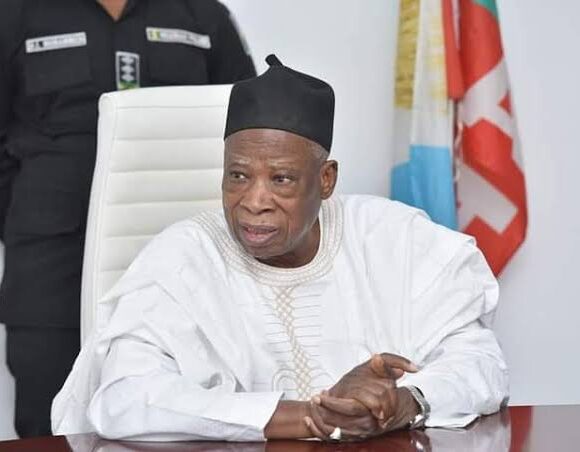
Chido Onumah @60: A man so good, yet so true

By Uche Ugboajah
There are some people who come into your life and you wish you had never met them. Yet there are others whom you meet and begin to wonder where they have been all your life. Dr. Chido Onumah belongs firmly to the latter category—those rare individuals you encounter, connect with instantly, and wish you had known much earlier.
Although I had followed him for years through his weekly column in The Punch, I first met Chido in person in 2015 in Abuja. I had been co-opted into a team on a national anti-corruption assignment of which he was a key member.

From the highly cerebral and sometimes polemical tone of his newspaper writings, I had formed an image of an aggressive, bullish, and impatient activist.
The man who stood before me, however, bore no resemblance to that mental portrait. Instead, he was calm, measured, and strikingly gentle.
The first thing that stood out was how soft-spoken he is. He chooses his words with the care of a seasoned stylist, as though unwilling to squander language. Equally impressive is his patience.
Even when someone advances an argument that seems illogical, Chido allows the person to finish before responding. That capacity to listen—genuinely and without interruption—is rare. It is a virtue not commonly found in public intellectuals or activists.
That first meeting laid the foundation for what I would be understating if described merely as friendship. What Chido and I share is brotherhood.
If you do not call him, he will call you. If you forget him, he will remember you.
From that encounter years ago, hardly a day has passed without some form of communication between us. As the Igbo would say of enduring relationships, one party often holds the key to sustaining the bond. There is no prize for guessing that Chido holds that key in virtually all his friendships.
If you do not call him, he will call you. If you forget him, he will remember you. Whether he is older than you or not is immaterial—he makes time.
When Chido is your friend, you gain far more than companionship. You gain a confidant, a counsellor, and a dependable ally. Your children gain a caring uncle who takes genuine interest in their academic progress and general wellbeing.
Few friends are willing to listen to your personal struggles—family tensions, marital strain, unemployment, health concerns—without seeing them like sob stories, or making you feel diminished for sharing. Chido not only listens; he engages.
Like a trained therapist, he first calms you, then begins to deploy his expansive network of contacts and social capital in search of practical solutions, beginning with accurate information.
In this, he exemplifies the Igbo saying, “Onye nwere madu ka onye nwere ego”—he who has people is wealthier than he who has money.
In the field of information management and communications, Chido is exceptionally well-rounded. Though he first studied Philosophy at the University of Calabar, he has become one of the finest communications practitioners of his generation.
His activism began in student union politics at the University of Calabar.
Over three decades, he has practised journalism across three continents, working in Nigeria, Ghana, the United States, and India. A firm believer in lifelong learning, he later earned a doctorate in Communications from the Autonomous University of Barcelona.
Disturbed by the under-reporting and misrepresentation of the South-East and their implications for governance, Chido co-founded the Ikenga Media & Cultural Awareness Initiative (IMCAI), publishers of Ikengaonline in March 2022.
The platform has grown into a leading accountability-focused online newspaper in the region. Through Ikenga, he and his colleagues have strengthened journalism in the South-East, promoting ethical reorientation, investigative rigour, and mentoring programmes for reporters and campus journalists.
A noiseless activist, Chido has long earned his place as a civic leader in Nigeria and beyond. His activism began in student union politics at the University of Calabar and at the level of the National Association of Nigerian Students (NANS), grounded in radical, pro-democracy ideals.
He was deeply involved in the resistance against military rule, particularly during the nationwide struggles that followed the annulment of the June 12, 1993 election.
He was among the small circle of courageous journalists who defied the Abacha military regime to continue reporting at great personal risk.
At a time when routine reportage could lead to detention or worse, he served as a reporter with The News and Tempo magazines, then edited by Bayo Onanuga. It was a period that tested the resolve of media practitioners, and Chido stood firm.
Never one to abandon journalism, he later pivoted toward media and information literacy to enhance journalism’s role in promoting accountability.
He co-founded the African Centre for Media & Information Literacy (AFRICMIL), where he serves as Coordinator. Through AFRICMIL and its flagship initiative, Corruption Anonymous (CORA), he has become a leading advocate of whistleblower protection in Nigeria.
Although Nigeria adopted a Whistleblower Policy nearly a decade ago, Chido and his team have consistently pushed for comprehensive legislation to provide legal protection for whistleblowers.
Working alongside the Presidential Initiative on Continuous Audit (PICA) and other civil society actors, they have sustained advocacy for stronger institutional safeguards.
His commitment has gained international recognition, culminating in his appointment as Chair of the Board of the Whistleblowing International Network (WIN).
With the return of democracy in 1999, when President Olusegun Obasanjo established the Economic and Financial Crimes Commission (EFCC), Chido, an anti-governmentalist, found himself serving in government as one of the Commission’s pioneer staff members.
Despite his activist disposition, he embraced the opportunity to contribute his institution-building expertise.
As Personal Assistant to Mallam Nuhu Ribadu, then Chairman of the EFCC, he provided critical executive and strategic support during the Commission’s formative years.
At a time when the institution lacked infrastructure and experienced personnel, Chido helped shape its communications and policy direction.
He is also a committed public intellectual.
That era is still widely regarded as the EFCC’s golden period, characterised by missionary zeal and patriotic commitment.
Chido is not merely an activist; he is also a committed public intellectual. An avid reader and disciplined researcher, he believes in interrogating ideas rigorously and documenting facts carefully.
He has authored and edited several influential books, including We Are All Biafrans; Time to Reclaim Nigeria; Nigeria is Negotiable, Remaking Nigeria: Sixty Years, Sixty Voices; and Testimony to Courage: Essays in Honour of Dapo Olorunyomi (co-edited with Frederick Adetiba). He also co-edited Understanding Nigeria and the New Imperialism: Essays 2000–2006.
For someone with such a demanding schedule, his literary output is remarkable. His organisational discipline is equally noteworthy. He documents everything. Unlike the average Nigerian tailor or seamstress who over estimate his or her retentive memory, Chido writes things down—whether reading a book, watching a documentary, or attending a lecture.
He once told me that this habit has been invaluable to his writings. Observing him for even a day at work may be more enriching than reading volumes on so called ‘habits of successful people.’
Perhaps the most admirable dimension of Chido’s life is his devotion to family. For an Igbo man, family extends beyond the nuclear household, encompassing a wide network of relatives and obligations.
Chido does not shy away from these responsibilities. I have watched him balance professional commitments, activism, and writing while still making time for his loved ones.
Distance and time zones pose no barrier. Even from Nigeria, he keeps close watch over his children abroad, assisting with schoolwork and maintaining daily contact.
Having lost his mother at barely thirteen, he matured early, assuming responsibility for his younger siblings—bonds that remain strong to this day. That early responsibility perhaps explains his versatility: he can cook, clean, and adapt to virtually any situation.
His devotion to his aged father is equally profound. Since I have known him, he has never failed to travel to be with, and celebrate his father’s birthday each year. That is the essential Chido.
I remember when Chido introduced his spouse to me, I jokingly advised her to take good care of my brother. She wondered why everyone said the same thing and asked who would then take care of her.
With a smile I assured her she was in good hands because caring for others is simply Chido’s default mode.
How a man can be so good and yet so genuine remains the most astonishing thing about Chido. Dr. Ike Okota his friend, once told us in the office, “if you cannot work with Chido, then take a look at yourself because you are the problem.”
Similarly, on his fifty-fifth birthday, I remarked that although he does not advertise religiosity, he lives a life that would make a saint proud—kind, humble, honest, and modest in his needs – an evangelizer’s nightmare.
I also once told him, half in jest, that if I were a woman and he proposed marriage, I would refuse. Shocked with disbelief, he asked why. I told him he was simply too good. But the truth is this: As he turns 60, Chido’s life contradicts that weather beaten phrase, ‘too good to be true’ but bears out the parallelism, ‘too good, yet so true.’
Happy Birthday my brother, Chido!
Read Also: Whistleblowing: Of Law, Justice, and the Guardians in Between
Author

Sign up for The Insight Newsletter
Get in-depth, research and data-based interpretative reports from around Nigeria.