
2026 World Cup: How Ruthless Spain Sunk Argentina to Claim 2nd Victory
By Emmanuel Kwada
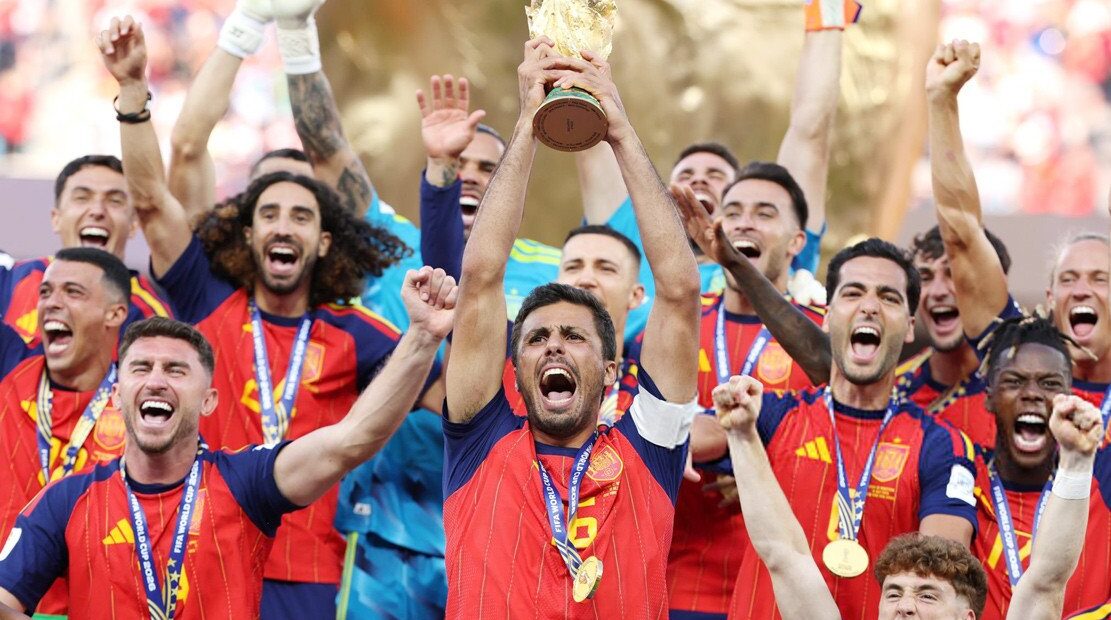
Spain cemented their place among football’s modern greats on Sunday night, defeating defending champions Argentina 1-0 after extra time to win the 2026 FIFA World Cup and secure their second global crown in a performance defined by dominance, patience and clinical execution.
In front of a packed crowd of more than 80,000 spectators at the New York New Jersey Stadium, La Roja produced a masterclass in possession football, suffocating Argentina for long stretches and eventually breaking the South Americans’ resistance through Ferran Torres’ decisive strike in extra time.
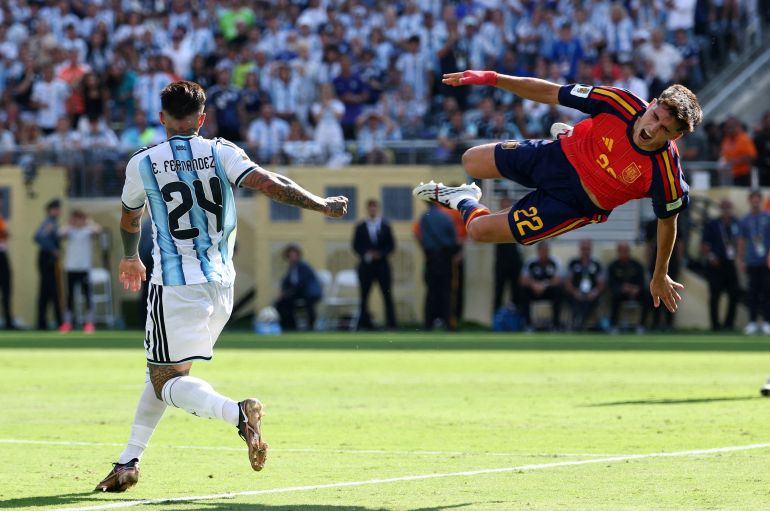
Argentina’s Enzo Fernandez fouls Spain’s Pau Cubarsi and is later shown a second yellow card before being shown a red card [Mark J Rebilas/Reuters]
For Argentina, the defeat marked a painful end to their reign as world champions and what many believe could be the final World Cup appearance of football icon Lionel Messi. While the Albiceleste battled courageously, they were largely second-best against a younger, faster and more cohesive Spanish side that controlled the rhythm of the contest from start to finish.
From the opening whistle, Spain dictated proceedings through their trademark passing game. Rodri, Pedri and the midfield unit repeatedly denied Argentina opportunities to settle into the match, forcing the defending champions to spend long periods chasing possession.
Despite Spain’s territorial dominance, Argentina’s defensive organisation kept the score level throughout regulation time. Goalkeeper Emiliano Martínez and his backline repelled wave after wave of Spanish attacks, frustrating a side that looked increasingly likely to find a breakthrough.
As the match moved into extra time, Spain intensified the pressure. Argentina’s hopes suffered a major setback when midfielder Enzo Fernández received a second yellow card following a reckless challenge on Spain’s young defender Pau Cubarsí.
The Chelsea midfielder mistimed his tackle completely, sending Cubarsí tumbling and leaving Argentina to navigate the remainder of the final with ten men.
The numerical advantage eventually proved decisive.
After 105 minutes of relentless probing, Spain finally found the moment they had been searching for. Pedro Porro delivered a dangerous ball into the penalty area, where Nico Williams rose at the back post to nod the ball back into the danger zone. Waiting unmarked was Barcelona forward Ferran Torres, who reacted instantly and thundered a right-footed effort into the roof of the net.
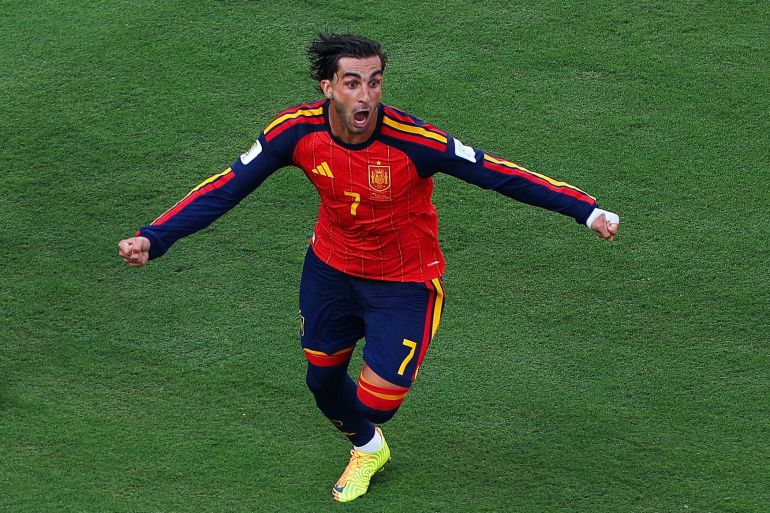
Spain’s Ferran Torres celebrates scoring their winning goal against Argentina [Mike Segar/Reuters]
Torres’ strike ultimately settled a final that reflected Spain’s superiority throughout the tournament. The European champions displayed a blend of youthful energy and tactical maturity that overwhelmed opponents from the group stage to the final.
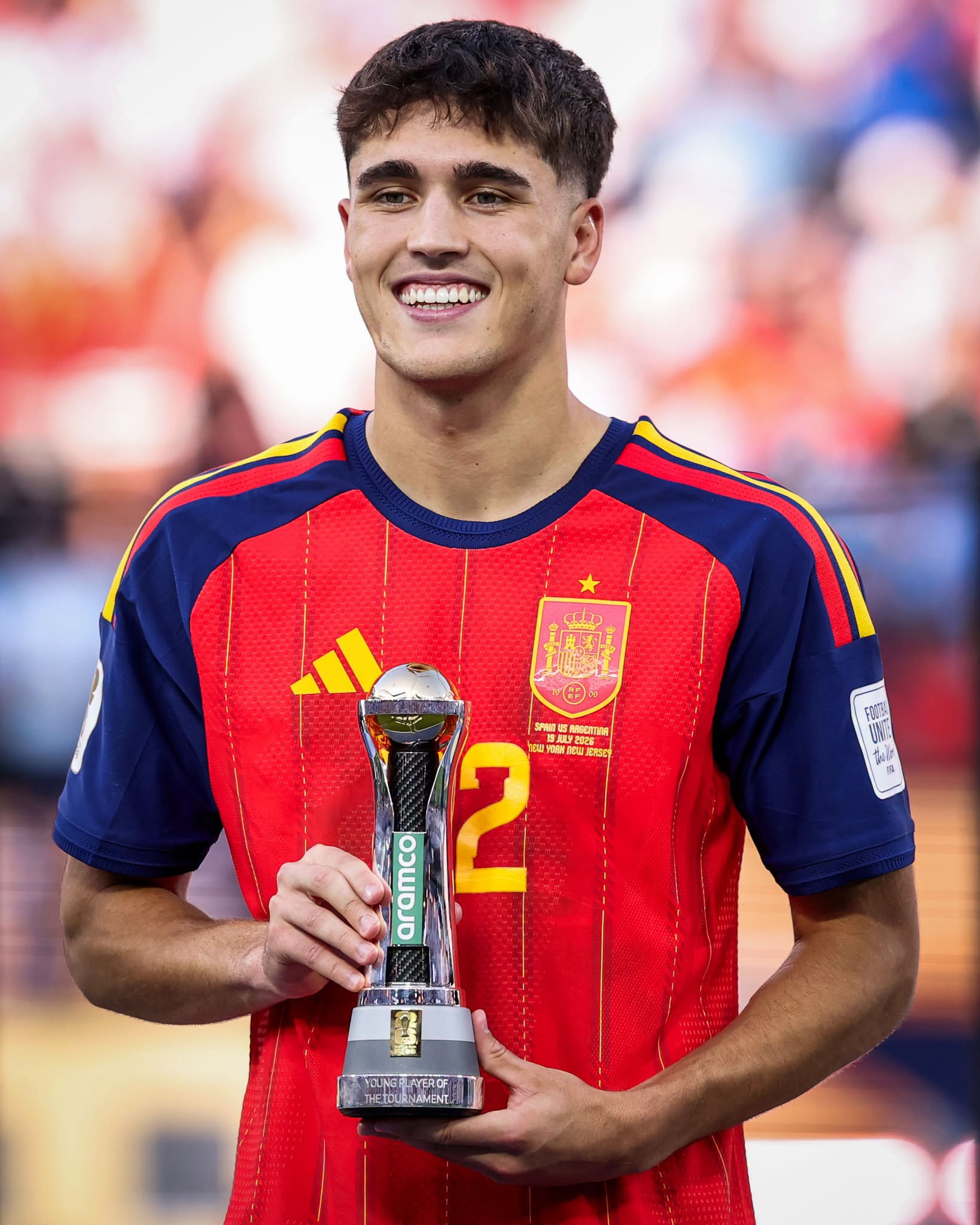
Best Young Player: Pau Cubarsí announces himself on the world stage
The tournament also served as a showcase for Spain’s new generation. Teen sensation Lamine Yamal continued to underline his immense talent, while defender Pau Cubarsí emerged as one of the competition’s biggest revelations. Their performances highlighted the depth of a squad that appears capable of dominating international football for years to come.
Spain’s triumph was further reflected in the individual awards handed out at the end of the tournament. Midfield general Rodri was named winner of the Golden Ball as the competition’s best player after orchestrating Spain’s campaign with authority and composure.
Goalkeeper Unai Simón claimed the Golden Glove award for his outstanding performances between the posts, while Cubarsí was recognised as the Best Young Player of the tournament. Spain also received the Fair Play Award, underscoring the discipline and professionalism that characterised their campaign.
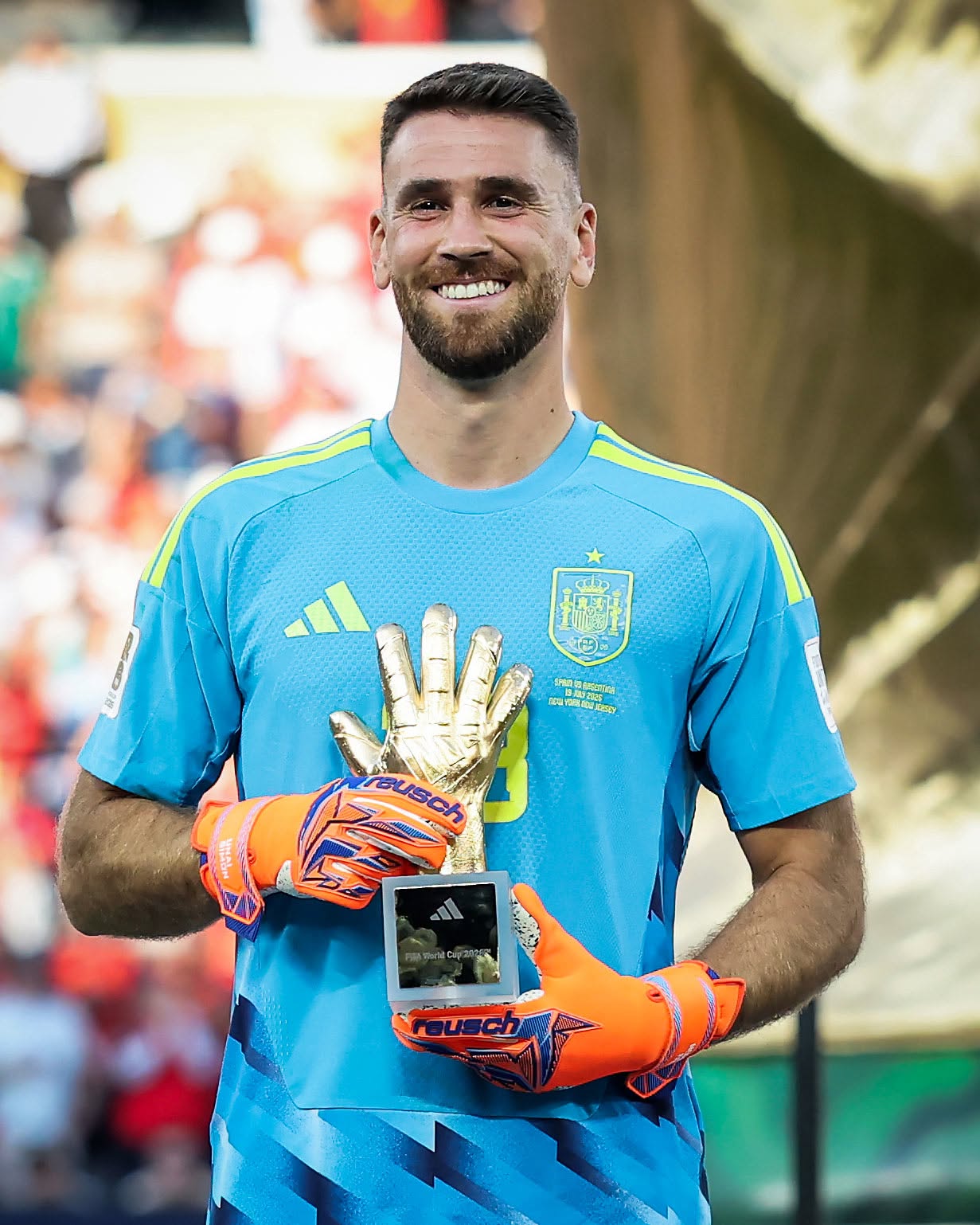
Golden Glove: Unai Simón stands tall as Spain’s last line of defense
France captain Kylian Mbappé collected the Golden Boot after finishing as the tournament’s leading scorer, becoming the first player in World Cup history to win the prestigious award twice.
Spain’s victory also resonated far beyond the football pitch. Celebrations erupted across Spain and among supporters worldwide, with scenes of jubilation reported in cities across Europe, Latin America and even conflict-affected regions where football remains a source of hope and unity.
The 2026 World Cup, hosted across the United States, Canada and Mexico, concluded after a month of drama, surprises and memorable performances. England secured third place after defeating France in the playoff match, while Argentina finished as runners-up after an impressive title defence that ultimately fell one game short.
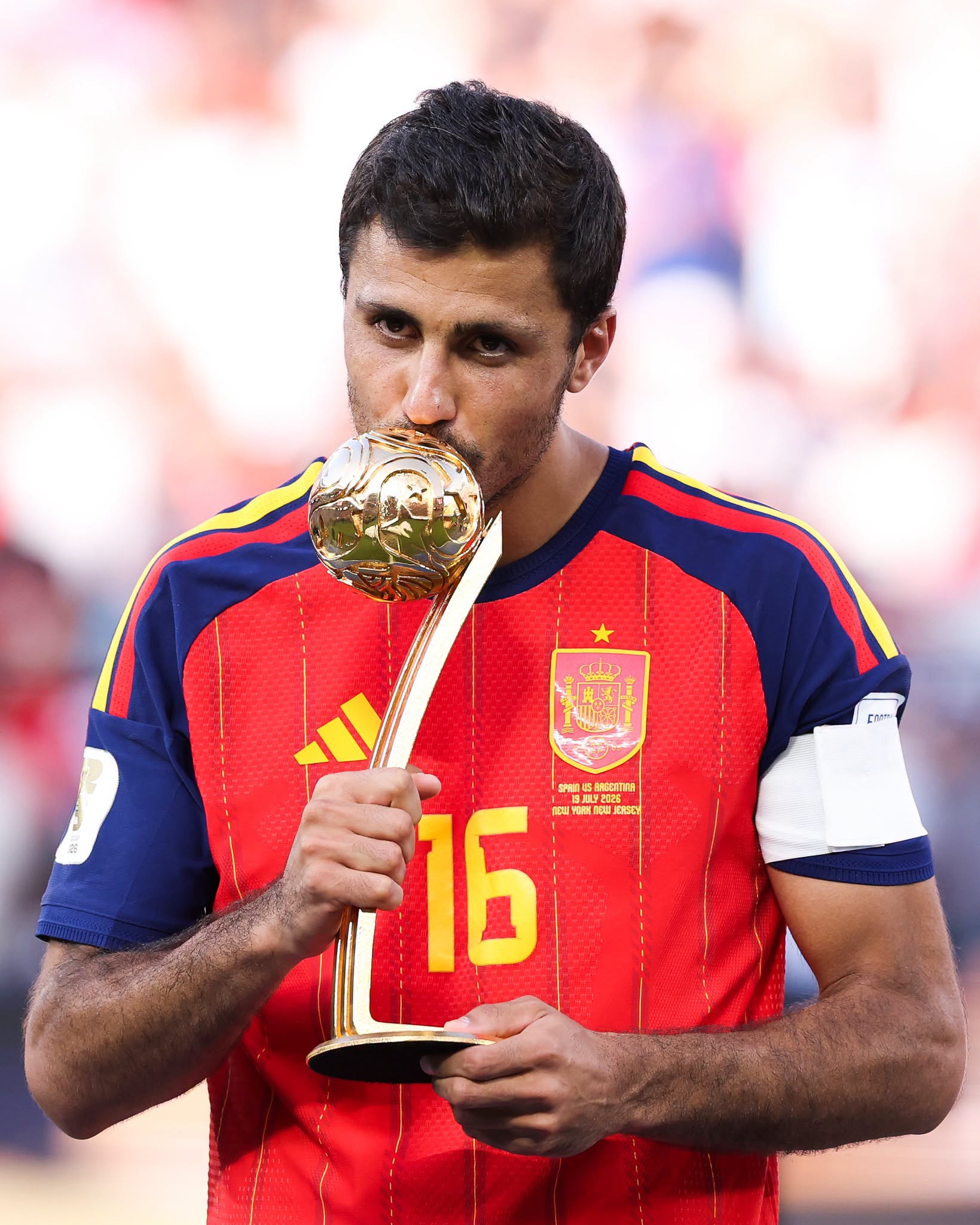
Golden Ball Winner: Rodri dominates midfield as Spain lifts the 2026 World Cup
Adding to the significance of the tournament, United States President Donald Trump described the competition as “one of the greatest events of any kind ever held,” praising the scale, atmosphere and global attention generated by the expanded World Cup.
As Spain lift the trophy and celebrate a new golden era, the football world is already looking ahead to the next edition of the tournament in 2030.
For now, however, the spotlight belongs to La Roja—a ruthless, talented and fearless side that dismantled the reigning champions and wrote a new chapter in World Cup history.
Read Also: FIFA to Award First-Ever Rings to World Cup Winners; Trump to Attend Final
Author

Sign up for The Insight Newsletter
Get in-depth, research and data-based interpretative reports from around Nigeria.


