Persecution: Alex Barbir, a Misunderstood Humanitarian

By Emmanuel Kwada
Alex Barbir, an American missionary and former athlete, brought a unique blend of sportsmanship and faith to Nigeria during his mission from December 2025 to April 2026.
Before his missionary work, Barbir had a notable sports career as a college football kicker, recognized for his discipline, resilience, and ability to perform under pressure. These qualities later shaped his approach to service and leadership in challenging environments.
In Nigeria, Barbir focused on community engagement, youth empowerment, and interfaith dialogue.

South Forsyth senior Alex Barbir was an all-state kicker for the War Eagles the past two seasons. – photo by File photo
He leveraged his sports background to organize football clinics and mentorship programs, using athletics as a tool to foster unity among young people from diverse ethnic and religious backgrounds.
His initiatives provided safe spaces for youth to channel their energy positively, reducing vulnerability to extremist recruitment.
By combining sports with spiritual guidance, Barbir emphasized teamwork, discipline, and hope—values that resonated deeply in communities affected by violence.
From my observation and analysis, Alex Barbir finds himself at the center of controversy not for committing any crime, but for the straightforward acts of documenting the impact of attacks, rebuilding destroyed homes and infrastructure, and calling for greater accountability from those responsible for protecting citizens.
This reaction appears rooted in a fundamental misunderstanding of his role as a faith-driven humanitarian focused on practical relief and truthful reporting of conditions on the ground.
His situation highlights how good intentions and direct action can sometimes be misinterpreted in complex environments, leading to suspicion, public criticism, and even official responses that appear disproportionate to the actual contributions made.
Barbir’s real challenge, in the eyes of many observers, lies in his unwillingness to stay silent about the ongoing suffering of vulnerable communities in Nigeria’s Middle Belt.
While Nigerian authorities work to address deep-rooted insecurity challenges, Barbir has faced intense scrutiny, including public accusations, claims of expulsion, and questions about his motives.
Much of this reaction appears rooted in a fundamental misunderstanding of his role as a faith-driven humanitarian focused on practical relief and truthful reporting of conditions on the ground.
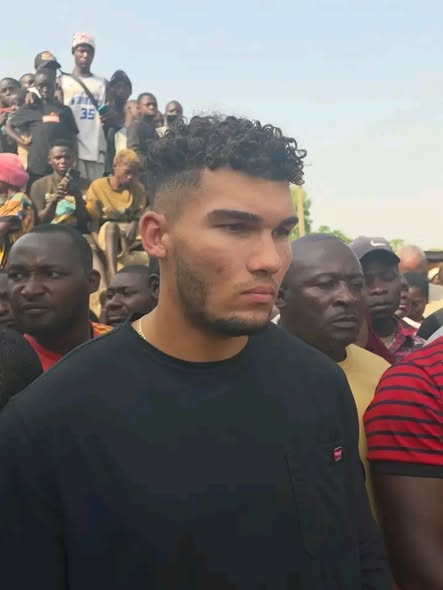
Alex Barbir, an American missionary at the burial of the 12 Christians massacred in Plateau State.
Through his initiative Building Zion, in partnership with Equipping the Persecuted (ETP) led by Judd Saul, he has channeled efforts into delivering immediate, tangible assistance to communities ravaged by violence.
This is precisely what many Nigerian governments, Christian groups, and philanthropists have failed to do for victims of repeated attacks by Fulani militia.
Eschewing lengthy bureaucratic processes that can delay aid, Barbir and his small team have personally helped construct homes, drill boreholes for clean water, repair or build churches and clinics, and support survivors seeking to regain a sense of normalcy after devastating losses.
His activities have concentrated in states heavily affected by insecurity: Benue, Plateau, Kaduna, Taraba, and Kwara.
Barbir oversaw the reconstruction of approximately 35 to 44 new houses for displaced families.
One prominent example is the community of Yelwata in Guma Local Government Area of Benue State, which suffered horrific coordinated attacks in June 2025 that resulted in significant loss of life; reports indicate over 150 to 200 people killed, and the destruction of hundreds of homes.
Barbir oversaw the reconstruction of approximately 35 to 44 new houses for displaced families.
He also facilitated the drilling of a borehole that locals have praised as one of the best in the town, providing access to clean water in an area long underserved.
In Benue State, some officials have complained that he didn’t contact them before he went to places where there had been violence.
Barbir made multiple visits between December 2025 and March 2026, bringing practical support, shelter, and encouragement to women, children, and the elderly in internally displaced persons (IDP) camps.
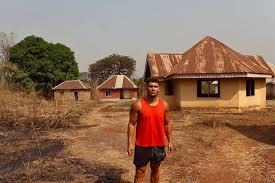
Alex Barbir; behind him are houses built by him for displaced persons in Benue State, Nigeria.
Similar rebuilding initiatives have taken place in Bokkos and Barkin Ladi in Plateau State, as well as in parts of Kwande and Gwer West in Benue and other affected locations.
Survivors recall Barbir walking through recently impacted villages, carefully recording the extent of destruction—razed homes, damaged places of worship, and other visible signs of violence—while offering on-site assistance.
Supporters view him as a committed Christian humanitarian who responds promptly to areas where grief is still fresh and official follow-up may be limited or delayed.
His videos and field interviews have helped illustrate the human cost: grieving families, abandoned farmlands, and residents calling for basic protection and support.
It is this direct documentation and candid description of the violence that has generated significant backlash and misunderstanding.
Read Also: Boko Haram Kills Over 30, Injures Many, Destroys Churches in Twin Attacks on Adamawa Community
Barbir has characterized the attacks in the Middle Belt as targeted against Christian farming communities, drawing on patterns he observed firsthand and using descriptive terms such as “genocide” and “war” to convey the scale and repetition of incidents.
In Miango, Plateau State, he reportedly told residents that when government protection falls short, citizens retain a fundamental right to defend themselves.
Barbir’s visa was revoked and that he was expelled for sowing division.
In circulated videos, he posed direct questions to President Bola Ahmed Tinubu about the safety of citizens and urged the U.S. government to examine the specific dynamics in the Middle Belt, distinct from other security threats such as Boko Haram.
These on-the-ground observations have been labeled “inflammatory” by some federal officials.
Minister of Information Mohammed Idris and presidential aide Bayo Onanuga have critiqued certain remarks as misleading or potentially disruptive to national cohesion.
Abiodun Essiet, Senior Special Assistant to the President on Community Engagement, stated that Barbir’s visa was revoked and that he was expelled for sowing division, even suggesting a link between one of his speeches in Jos and subsequent violence.
Barbir has consistently rejected any claim of expulsion, publicly sharing his travel documents to demonstrate a planned round-trip visit that ended on April 1, 2026, and maintaining that authorities have spread inaccurate information to undermine a voice focused on transparency.
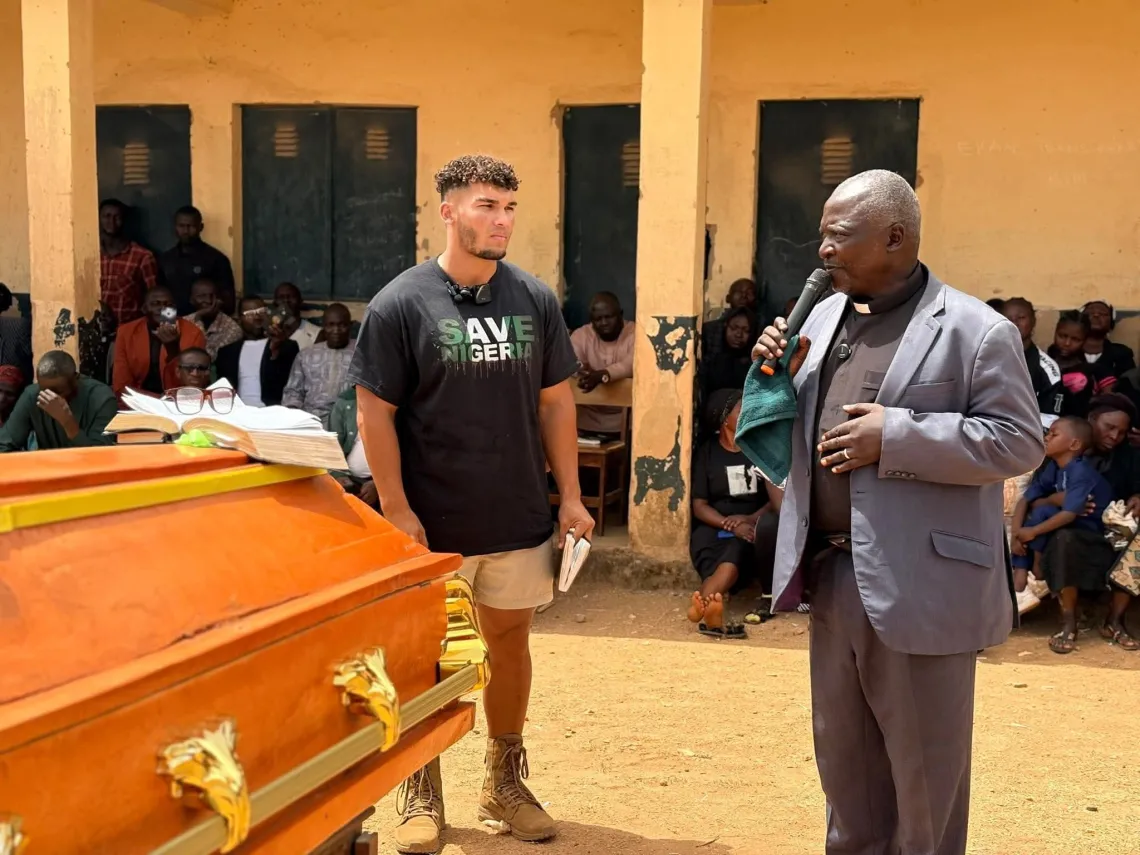
Pastor Ezekiel Dachomo and Alex Barbir during one of the mass burials in Jos, Plateau State, Nigeria.
Local government chairmen have also voiced concerns, contributing to the atmosphere of misunderstanding.
In Gwer West, Chairman Victor Ormin expressed dissatisfaction that Barbir’s visits did not fully route through his office in its capacity as chief security officer.
In Kwande, Chairman Vitalis Neji raised similar points about protocol and inquired about the measurable impact of the interventions.
In Guma, differences emerged regarding a proposed market reconstruction in Yelwata: Barbir suggested an approach costing around ₦60 million, while officials referenced estimates closer to ₦300 million, which he considered inflated.
He also questioned aspects of official reporting on completed housing units. Residents, including Daniel Gbenda, have urged authorities not to hinder private humanitarian efforts, noting that such initiatives often provide quicker and more economical relief compared to formal government channels.
Despite these frictions, the primary beneficiaries—the vulnerable survivors of insecurity—have largely rallied in support of Barbir.
His visits as a source of rare encouragement and renewed faith during difficult times.
Individuals such as Nathan Terna in Gwer West and youth leader Daniel Choji in Bokkos have emphasized that Barbir simply reported the destruction and protection gaps he witnessed directly.
An IDP resident in Agagbe camp described his visits as a source of rare encouragement and renewed faith during difficult times.
Community members repeatedly highlight that he delivers concrete aid—shelter, water, and rebuilt homes—while drawing attention to realities that many rural villagers feel are under-prioritized by authorities, fostering a perception that their lives and security receive insufficient attention.
Barbir has defended his work as grounded in truth-telling and hands-on compassion. In various interviews and in a video in circulation, he has stated, “The truth is my greatest weapon… Anybody in their right mind should protect themselves.”
He has condemned violence against Muslims and other groups in different parts of northern Nigeria as “pure evil,” while arguing that the communities he has engaged with in the Middle Belt experience specifically targeted assaults against Christians.
The truth is my greatest weapon… Anybody in their right mind should protect themselves.
He rejects suggestions of hidden agendas or acting as a foreign agent, inviting critics to provide concrete evidence rather than speculation.
His rebuilding projects, often completed at costs reportedly lower than some official projections, demonstrate a focus on delivering verifiable results over prolonged discussions.
The sustained criticism and official actions directed at Barbir reveal a recurring pattern in Nigeria: those who document rural insecurity in detail and offer unmediated assistance can encounter suspicion, procedural barriers, and orchestrated pushback.
Officials rightly emphasize coordination, adherence to protocol, and the preservation of national unity in addressing sensitive security matters.
Read Also:Yobe: Rescued Christian Girl Vomits Concoctions in Church, Centre Issues Ultimatum
At the same time, victims in remote villages continue to appeal for effective protection that would allow them to resume farming, worship freely, and raise families without perpetual fear.
As incidents of violence persist, Barbir continues his advocacy from outside the country. He shares updates on projects such as water wells paired with rebuilt homes in places like Barkin Ladi.
To some detractors, he appears as an outsider meddling in internal affairs. To the communities he has directly assisted, however, he represents a compassionate presence that chose engagement over indifference.
Alex Barbir’s experience ultimately points to a deeper challenge within Nigeria’s conflict-affected regions.
When individuals bear witness to the suffering of marginalized citizens and respond with practical solidarity, their actions can be misconstrued as interference or provocation, sometimes provoking stronger institutional reactions than the underlying violence itself.
A misunderstood ally who prioritized tangible help and honest reporting over convenient silence.
His quiet yet determined humanitarian efforts—providing shelter, clean water, and rebuilt homes to those repeatedly failed by insecurity—serve as concrete evidence of commitment that transcends rhetoric.
This stands out because he stepped in to do what many Nigerian governments, Christian groups, and philanthropists did not do for victims of Fulani militia attacks.
For the many victims of violence in Nigeria’s Middle Belt, Barbir stands as a misunderstood ally who prioritized tangible help and honest reporting over convenient silence.
His case invites reflection on how Nigeria might better accommodate transparent documentation and efficient private aid while safeguarding national interests.
As the cycle of attacks continues, the focus must remain on protecting lives and supporting recovery, regardless of who highlights the gaps.
Barbir, though now operating from afar, remains for many a symbol of solidarity rooted in action rather than politics—a humanitarian whose contributions, though subject to misinterpretation, have left measurable improvements in the lives of survivors.
Read Also: Lives of Rural Villagers Hold Little Value to Authorities in Nigeria – American Missionary
Author

Sign up for The Insight Newsletter
Get in-depth, research and data-based interpretative reports from around Nigeria.