Week in Review: Electoral Act Fears, $516M Loan Row, Plateau Protests Rock Nigeria
By Emmanuel Kwada
As Nigeria heads toward the 2027 general elections amid ongoing economic pressures and security challenges, the past week was dominated by intense debates over the integrity of the electoral process, fresh controversy surrounding a major infrastructure loan, high-stakes court proceedings, and grassroots anger in Plateau State.
Dive in for full details as THE INSIGHT provides context and analysis on the week’s top developments across Nigeria.
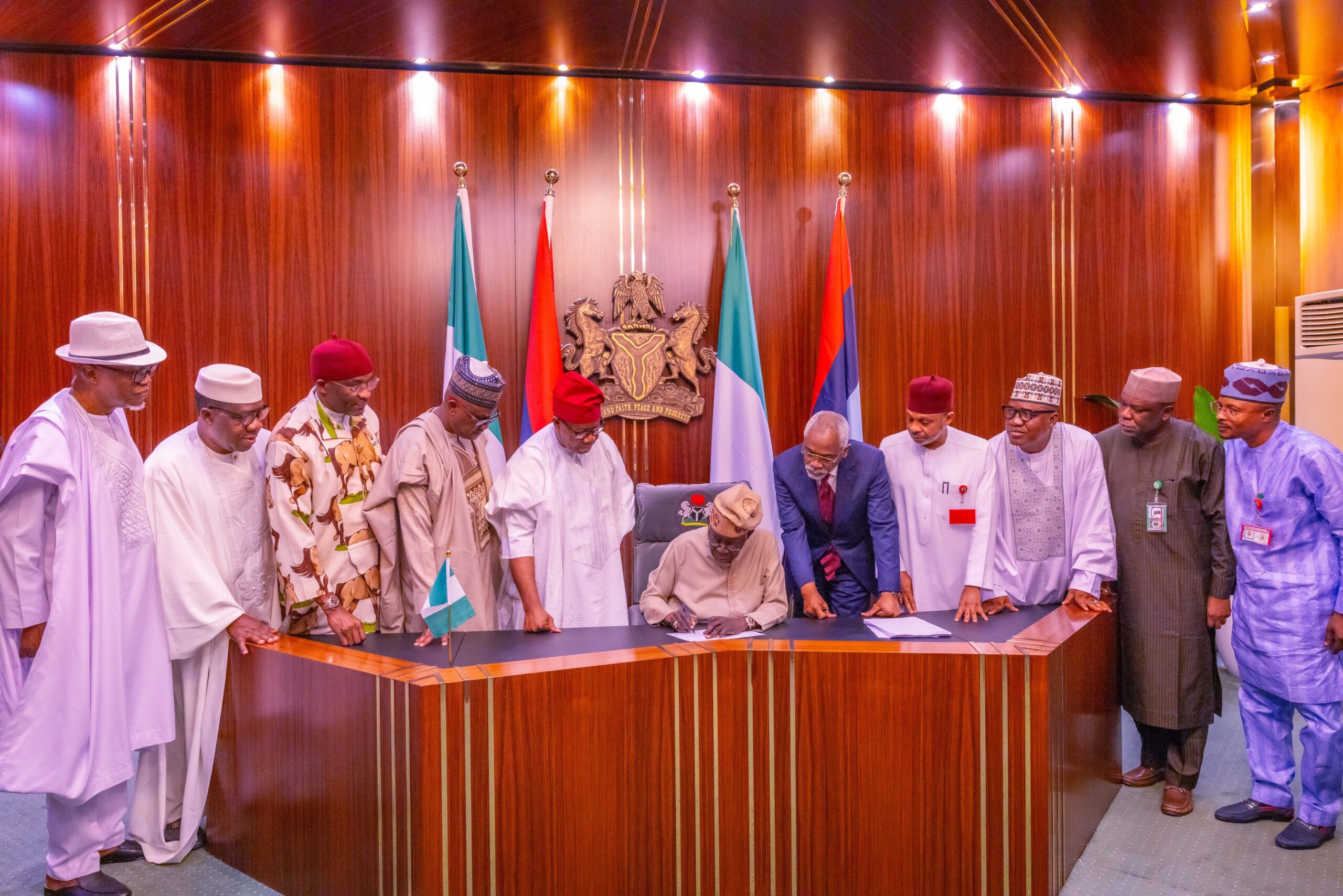
President Bola Ahmed Tinubu, Senator Godswill Akpabio, Femi Gbajabiamila, Tajudeen Abbas, and others during the Signing of Electoral Act Ceremony at State House
‘2027 Elections in Flames’ if Controversial Electoral Act Sections Stay, Former INEC Commissioner Igini Warns
Former Resident Electoral Commissioner of the Independent National Electoral Commission (INEC), Mr. Mike Igini, has issued a strong warning that key provisions in the newly signed Electoral Act 2026 could seriously undermine the integrity of the 2027 general elections by sabotaging the voting process at the polling unit level and weakening accountability mechanisms.
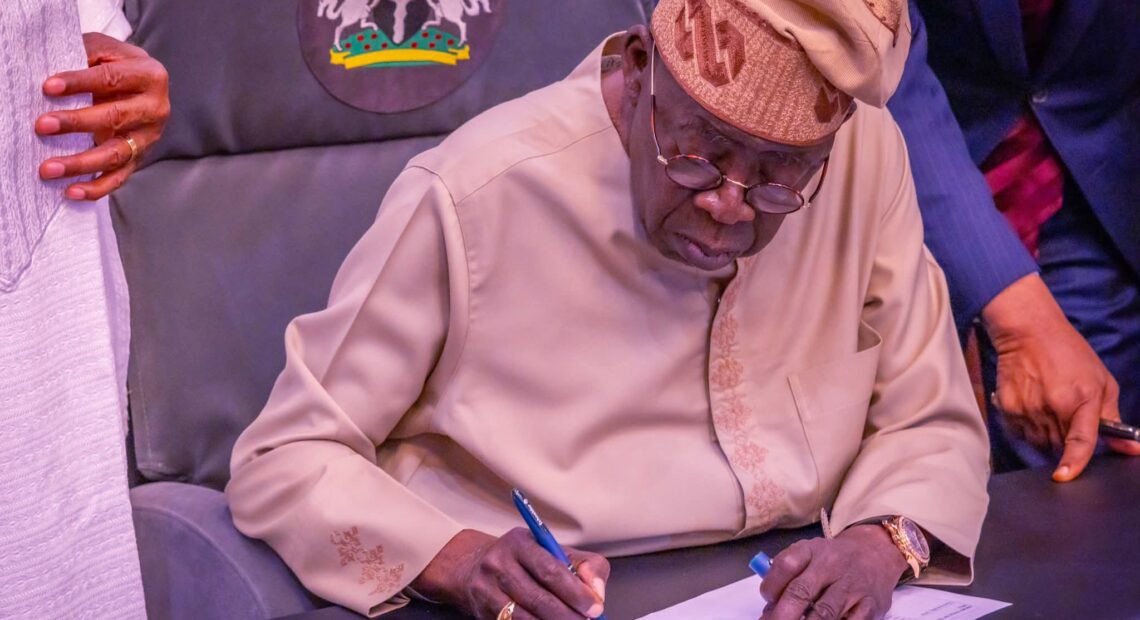
Igini, who spoke during a recent television interview, described Sections 63, 137, and 138 of the Act signed into law by President Bola Tinubu on February 18, 2026 as particularly dangerous, arguing that they create loopholes for electoral malpractice and shift the determination of election outcomes from polling units to courtrooms.
Highlighting Section 63, Igini noted that the provision reintroduces a clause previously removed after years of abuse.
Politicians who have access to INEC’s serial and security features could produce their own ballot papers.
He explained that a ballot paper lacking INEC’s official security features and manufacturer markings could still be accepted and counted if the presiding officer is “satisfied” with it.
“What that means is that politicians who have access to INEC’s serial and security features could produce their own ballot papers,” Igini warned.
“This is dangerous… a ballot paper that does not bear the official security features of INEC should be accepted by the presiding officer.”
He recalled past incidents, including cases in Imo State and other parts of the country where forged or unauthorised ballot papers allegedly found their way into the system, and expressed fear that the new discretion given to presiding officers many of whom are ad hoc staff could open the floodgates to ballot stuffing and manipulation.
If these provisions… are not repealed immediately, the integrity of the 2027 election will be in flames.
On Section 138, Igini criticised the provision for granting what he described as immunity to electoral officers.
The section states that an act or omission contrary to INEC’s instructions or guidelines, but not directly violating the Act itself, shall not be grounds for questioning an election.
He argued that this effectively shields presiding officers, collation officers, and returning officers from accountability when they deviate from INEC regulations and guidelines.
Turning to Section 137, Igini pointed out that it removes the requirement to join individual electoral officers as respondents in election petitions, even when they are directly accused of misconduct.
This, he said, compounds the problem of “dumping of documents” in court and makes it difficult for petitioners to prove non-compliance through oral evidence.
There will be efforts by politicians to capture the judicial system.
“If these provisions… are not repealed immediately, the integrity of the 2027 election will be in flames,” Igini declared, drawing from his decade-long experience conducting elections across the country.
“I say this because of my practical experience for 10 years and not 10 days of what I witnessed.”
Igini lamented the growing “expanding empire of the courts” in Nigerian elections, noting that disputes once resolved at polling units are now routinely decided in tribunals and courts.

INEC official uploading election results during the 2023 elections.
He referenced the French scholar Alexis de Tocqueville to stress that the strength of any democracy rests on a courageous and independent judiciary.
“The courts in Nigeria are now being asked to answer political questions rather than legal questions,” he said.
“Whenever courts of law are now made to answer political questions instead of legal questions… the tendency is that the judiciary will be vulnerable. There will be efforts by politicians to capture the judicial system.”
He urged the National Assembly to urgently revisit and repeal the contentious sections, particularly Section 63, describing the ballot as “the foundation” of any credible election.
Igini also called on the judiciary to adopt a purposive interpretation of the law advancing remedies while suppressing mischief and appealed to legal practitioners to uphold their role as the last line of defence for democracy and the rule of law.
With less than a year before off-cycle elections in some states and full general elections looming, calls are mounting for INEC and the legislature to address these gaps before the country heads to the polls.
The former REC concluded with a sobering assessment: good laws alone are not enough, but inadequate laws in the hands of those lacking commitment to democratic ideals could push Nigeria deeper into electoral challenges.
“Nigeria’s Future Being Mortgaged”: Nigerians Slam Tinubu’s $516M Loan Bid
Nigerians, including opposition parties and civil society voices, have sharply criticised President Bola Tinubu’s fresh request for a $516.33 million external loan, describing it as another instance of reckless borrowing that risks mortgaging the nation’s economic future.
The African Democratic Congress (ADC) Legislators’ Forum issued a strongly worded statement condemning the loan request, which seeks Senate approval for a syndicated facility from Deutsche Bank to finance Sections 1, 1A, and 1B of the proposed Sokoto–Badagry Superhighway project.
We must ask: at what cost, and under what conditions?
In the statement signed by Hon. Uko Ndukwe Nkole FNITP, PhD, Chairman of the ADC National Legislators’ Forum, the party described the move as “emblematic of an administration that has made reckless borrowing its default economic policy, with little regard for sustainability, accountability, or the wellbeing of future generations.”
The ADC acknowledged the importance of infrastructure but questioned the government’s approach: “While no responsible opposition undermines the importance of infrastructure development, we must ask: at what cost, and under what conditions?
“This government has failed to convincingly demonstrate that its endless appetite for loans is guided by a coherent, transparent, and economically viable repayment strategy.”
The forum warned that Nigeria’s already heavy debt burden, with debt servicing consuming a large portion of national revenue, is being worsened by continued borrowing.
Each new loan tightens the noose around the nation’s economic sovereignty, leaving future generations to pay for today’s lack of foresight.
It urged the National Assembly not to act as a “rubber stamp,” demanding full disclosure of the project’s financial details, procurement processes, cost-benefit analysis, and a credible repayment plan.
“Each new loan tightens the noose around the nation’s economic sovereignty, leaving future generations to pay for today’s lack of foresight,” the statement added.
The criticism was reinforced by other prominent voices. Seun Onigbinde, CEO of Budgit, remarked: “A poorly taken loan is even more dangerous than wasting public revenue. It’s unfortunate to take a loan when procurement processes are not effective.”
Another concerned Nigerian, Aminu Dalhatu, expressed broader frustration: “I’m sorry to say but we may end up suffering for nothing from the pains of removal of subsidies and devaluation of the Naira. Why are we going back on this borrowing spree now?”
The $516.33 million facility, with a proposed nine-year tenor (including up to three years’ grace period), is part of the government’s Renewed Hope Agenda.
The administration describes the 1,000-kilometre dual carriageway as a flagship project aimed at opening the North-South corridor and boosting trade and connectivity across several states.
You people are here and they are killing us, we don’t want soldiers anymore.
It is backed by a partial risk guarantee from the Islamic Corporation for the Insurance of Investment and Export Credit (ICIEC), with the Federal Government providing counterpart funding of approximately ₦265.5 billion.
“We Don’t Want Soldiers Anymore”: Plateau People’s Protest Enters Day 5 Amid Frustration Over Persistent Killings
Angry residents of Gashish community in Barkin Ladi Local Government Area of Plateau State continued their protest into its third day on Friday, openly demanding the withdrawal of Nigerian soldiers from their area.
The demonstration, which began on Monday, April 20, has seen hundreds of women, youths, and men take to the streets, accusing security forces of failing to protect them despite a heavy military presence.
The protest escalated dramatically on the first day when angry women and youths destroyed and set ablaze a military checkpoint mounted by Operation Enduring Peace near Rapung Kassa along the highway.
Protesters vandalized structures, burned equipment, and expressed deep-seated frustration over repeated attacks and killings attributed to suspected Fulani gunmen and bandits.
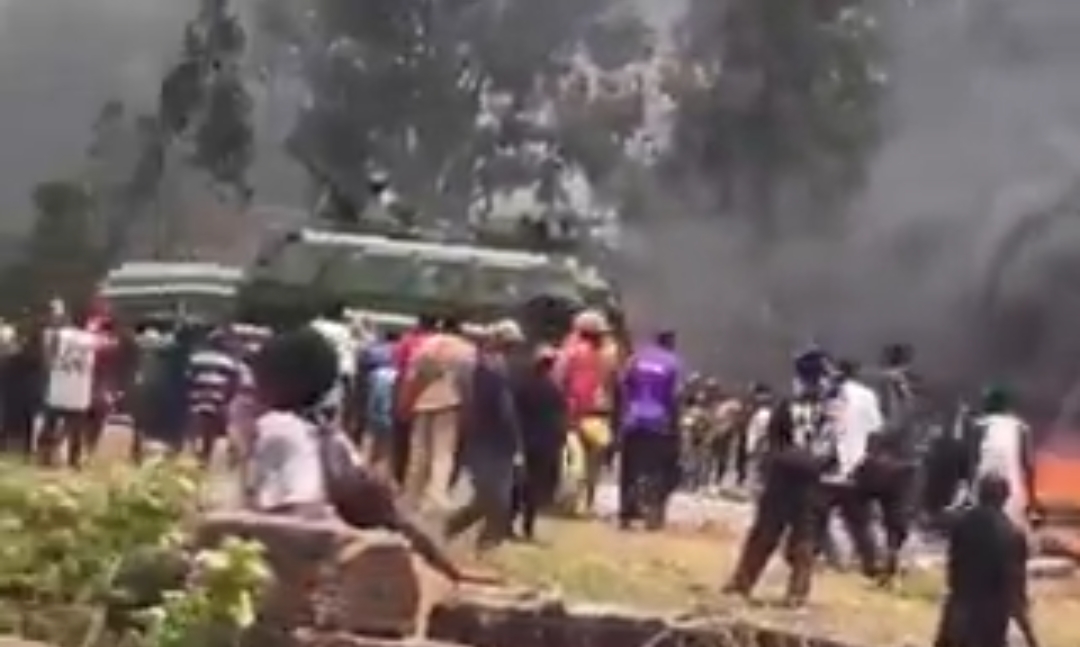
Image shows residents in Plateau protesting.
A resident captured the raw emotion in a widely circulated video, declaring:
“You people are here and they are killing us, we don’t want soldiers anymore.”
Another protester echoed the sentiment, lamenting the presence of troops without corresponding security:
“Enough is enough… their presence did not translate into improved security in the community.”
The immediate trigger for the protest was the killing of a local resident, Gyang Nuhu Choji, on April 16, whose body was reportedly found near the checkpoint area.
Residents also referenced earlier incidents, including the deaths of two students from Plateau State Polytechnic and a wave of kidnappings that have heightened fears in the farming communities.
Enough is enough… their presence did not translate into improved security in the community.
Dressed mostly in black and carrying tree branches and placards, the protesters marched through the community, chanting mournful songs and accusing the military of collusion or sheer incompetence.
A community leader, speaking on condition of anonymity, told reporters:
“We have buried too many of our people. Soldiers are stationed here, checkpoints everywhere, yet the attackers come and go freely. What is their purpose if not to protect us? We are tired of mourning.”*
The protest has drawn mixed reactions. While many in the predominantly Berom farming communities support the action as a cry for genuine security, others worry it could create a vacuum that worsens the situation or lead to clashes with security forces. No deaths or major injuries were reported during the checkpoint destruction, but tensions remain high.
Plateau State government officials have acknowledged the residents’ pain. A statement from the state’s security adviser called for restraint and promised enhanced intelligence-led operations to tackle the root causes of the violence.
We have buried too many of our people. Soldiers are stationed here, checkpoints everywhere, yet the attackers come and go freely.
However, many locals remain skeptical, pointing to years of farmer-herder clashes, banditry, and reprisal attacks that have plagued Barkin Ladi, Bokkos, and other parts of Plateau despite repeated military deployments.
Supreme Court Reserves Judgment in Leadership Crises Rocking ADC, PDP
The Supreme Court on Wednesday reserved judgment in two separate but significant appeals concerning leadership disputes in the African Democratic Congress (ADC) and the Peoples Democratic Party (PDP), heightening suspense within Nigeria’s opposition political circles ahead of the 2027 general elections.
In the ADC case, a five-member panel led by Justice Mohammed Lawal Garba heard arguments in an appeal filed by Senator David Mark, who leads one faction of the party and serves as its interim national chairman.
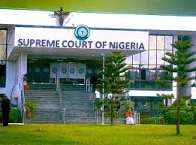
Entrance of the Supreme Court
The appeal (marked SC/CV/180/2026) seeks to set aside a March 12, 2026, judgment of the Court of Appeal. Mark’s faction, reportedly backed by several frontline opposition figures, is locked in a tussle with the faction led by Nafiu Bala Gombe.
The panel reserved its ruling after all parties adopted their briefs, with the date for judgment to be communicated later.
Separately, the same panel reserved judgment in appeals brought by the faction of the PDP led by former Minister Kabiru Tanimu Turaki (SAN).

ADC logo
These appeals challenge the Court of Appeal’s decision that nullified the PDP’s national convention held in Ibadan, Oyo State, in November 2025.
The disputes centre on the legitimacy of the party’s national leadership, secretariat control, and overall party machinery issues critical for conducting congresses, primaries, and nominating candidates.
The outcomes of these cases will have far-reaching implications for the structure and unity of Nigeria’s major opposition parties.
A clear resolution could either strengthen efforts at opposition realignment and coalition-building or deepen existing fragmentation as political actors intensify preparations for the 2027 polls.
Read Also: To Defeat Terror, Nigeria Must Channel Bibi’s Anger
Author

Sign up for The Insight Newsletter
Get in-depth, research and data-based interpretative reports from around Nigeria.