
26 Killed, 3 Injured in IED Attack Along Rann–Gamboru Ngala Road in Borno

Emmanuel Kwada
A devastating improvised explosive device (IED) attack claimed the lives of over 26 people, including women and children, on Monday, April 28, 2025, along the Rann–Kala Balge to Gamboru Ngala road in Borno State, underscoring the escalating threat of Boko Haram in the region.
Three others were injured in the assault, which targeted civilian vehicles traveling from Rann in Kala Balge Local Government Area toward Gamboru Ngala, security sources confirmed to THE INSIGHT.
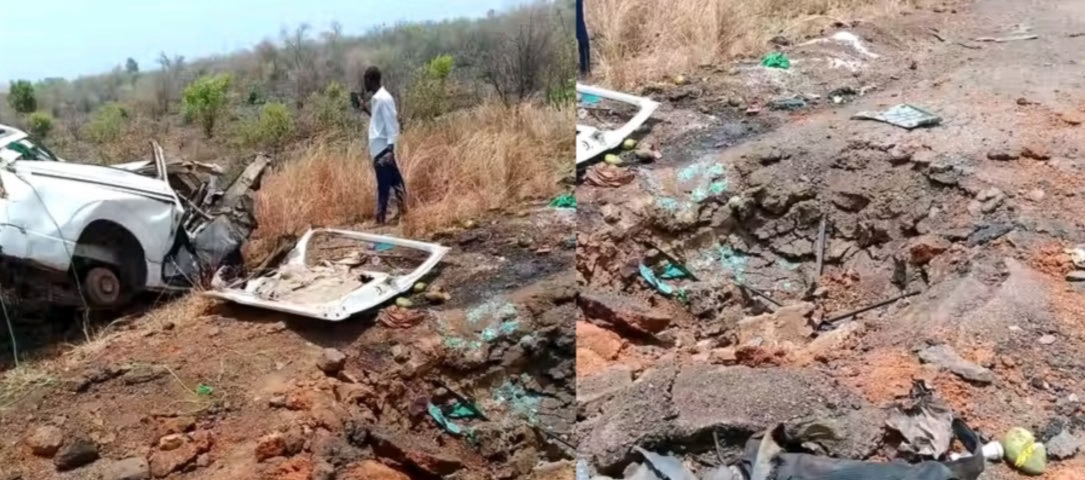
Wreckage from the devastating attack in Borno State
The attack occurred when a convoy of unsuspecting travelers triggered a series of strategically planted explosives along the route.
According to eyewitness accounts and security reports, the IEDs detonated upon vehicle movement, causing immediate and catastrophic loss of life. The scale of the casualties highlights the lethal precision of the ambush, believed to be orchestrated by ISWAP insurgents who have intensified their operations in recent months.
Emergency response teams were swiftly mobilized to the scene, evacuating the wounded and providing urgent medical assistance. The three injured survivors were rushed to nearby medical facilities, where they are receiving treatment for injuries ranging from shrapnel wounds to severe trauma.
IED attack claimed the lives of over 26 people, including women and children, on Monday, April 28, 2025
Security operatives have since sealed off the area, launching clearance operations to neutralize any remaining threats and prevent further attacks along the critical roadway.
The incident comes amid growing alarm from Borno State Governor Babagana Zulum, who has repeatedly warned of Boko Haram’s resurgence and their takeover of lands across the state.

Borno State Governor, Prof Babagana Umaru Zulum
Just days ago, Zulum raised concerns during a meeting with the Minister of Defence and top military commanders in Maiduguri, stating, “Boko Haram insurgents are regrouping in the Tumbus areas of Lake Chad and the Mandara Hills within the Sambisa Forest.”
He further cautioned that the terrorists were “freely breeding” in these areas, exploiting a lack of military presence and Nigeria’s porous borders with Sahelian states. “If the Sahel is not secured, Nigeria will never be secured,” Zulum emphasized, pointing to the international support the group receives and the infiltration of foreign insurgents.
If the Sahel is not secured, Nigeria will never be secured
Earlier this month, on April 9, 2025, Zulum delivered another stark warning during a Special Expanded Security Meeting, declaring, “Borno State is losing ground” to Boko Haram. He cited the group’s near-daily attacks and kidnappings, noting that “many communities” were being raided “without confrontation” from security forces.
The governor’s remarks followed a series of assaults, including the dislodgement of military formations in Wajirko, Sabon Gari, Wulgo, and Izge, alongside the killing of civilians and security personnel—events he described as a “setback in the fragile state of Borno and the North East region.”
Monday’s IED attack along the Rann–Gamboru Ngala road marks a grim realization of Zulum’s fears, as Boko Haram continues to assert control over parts of Borno State.
Borno State is losing ground” to Boko Haram
The incident follows a pattern of renewed violence, with a similar IED attack on April 13, 2025, along the Maiduguri–Damboa highway killing eight and injuring 21. Zulum, reflecting on that earlier tragedy, lamented, “It is unfortunate this is happening now. We haven’t witnessed an IED attack for over a year,” signaling the abrupt end to a period of relative calm.
Read Also: Data: Now, herdsmen shed more blood than bandits and terrorists
Author

Sign up for The Insight Newsletter
Get in-depth, research and data-based interpretative reports from around Nigeria.


