What You Should Know as Longest-Serving INEC Chair Yakubu Bows Out
key Points:
- Yakubu, longest-serving INEC Chairman, completed decade-long tenure with innovations.
- Agbamuche-Mbu became Acting Chairman, second woman leading INEC temporarily.
- Tinubu to appoint new chairman, Amupitan emerges as leading candidate.
- CSOs advocate independent INEC Chairman selection for neutrality, public trust.
- Yakubu’s tenure introduced innovations but faced delays, highlighting reform needs.
By Emmanuel Kwada
Professor Mahmood Yakubu, the longest-serving Chairman of Nigeria’s Independent National Electoral Commission (INEC), concluded his historic 10-year tenure on Tuesday, October 7, 2025, marking the end of an era in Nigeria’s electoral history.
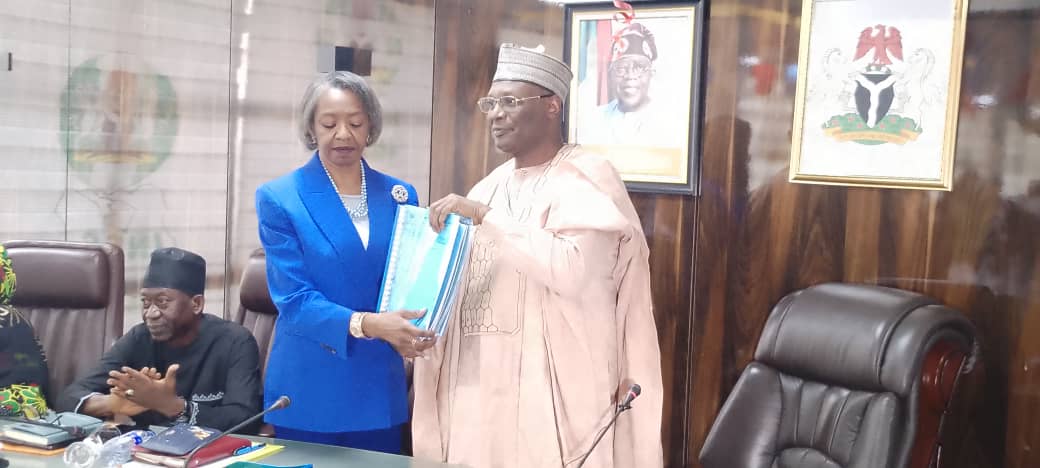
Yakubu, who made history as the first INEC Chairman to serve two consecutive terms, handed over the leadership of the commission to Mrs. May Agbamuche-Mbu, a National Commissioner, who will serve in an acting capacity pending the appointment of a new chairman.
His departure sets the stage for President Bola Ahmed Tinubu to announce a successor, with indications pointing to Professor Joash Ojo Amupitan as the frontrunner among three potential candidates.
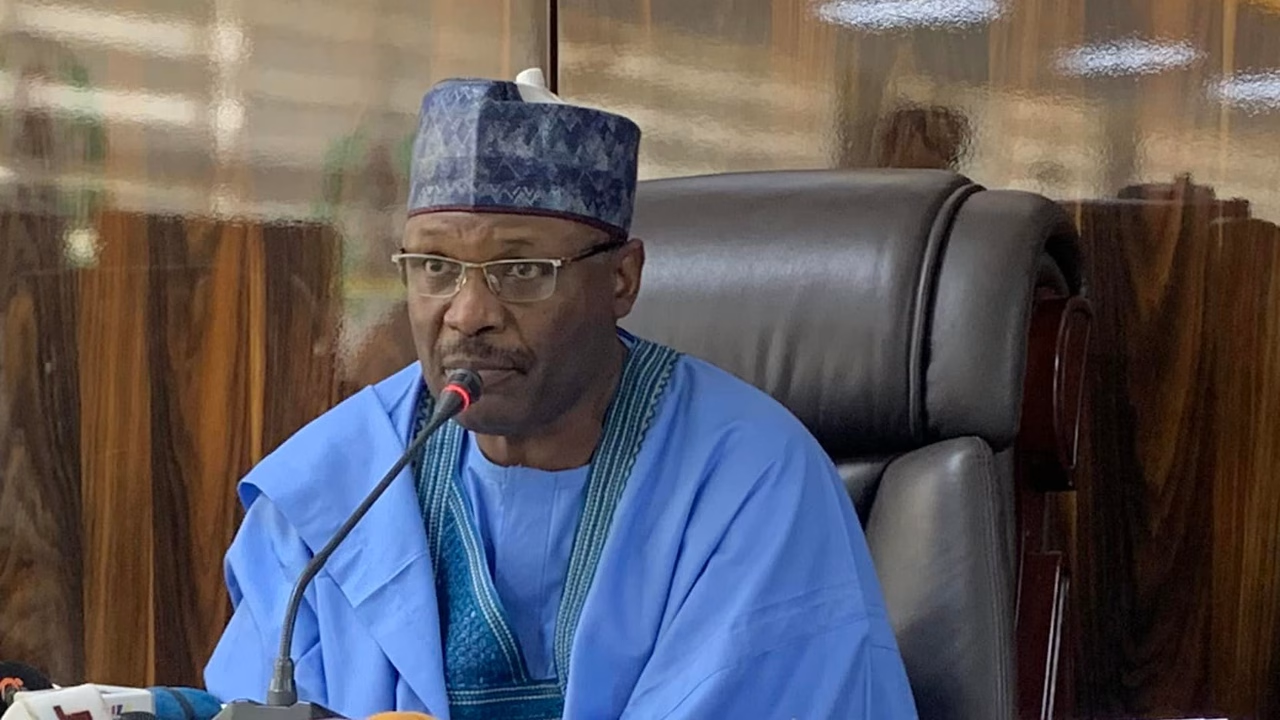
Ex-INEC Boss, Prof Mahmood Yakubu
A Historic Tenure
Professor Yakubu, appointed in November 2015 by former President Muhammadu Buhari and reappointed in 2020, served as the 14th Chairman of INEC and the only one to complete a decade in office.
His tenure outlasted all predecessors, surpassing the record of Abel Guobadia, the first INEC Chairman to complete a full term under a civilian administration. Yakubu’s leadership oversaw critical elections, including the 2019 and 2023 general elections, and he navigated the commission through challenges such as technological advancements, logistical complexities, and public scrutiny.
Yakubu’s tenure was not without controversy, as Nigeria’s elections often faced allegations of irregularities, logistical delays, and violence. However, his ability to complete two terms underscores his resilience and the confidence reposed in him by successive administrations.
have taken a decision and conveyed the same as provided by Section 36, Subsections 1 and 2 of the Constitution of the Federal Republic of Nigeria 1999, as amended
In a letter dated October 3, 2025, Yakubu expressed gratitude to President Tinubu for the opportunity to serve, emphasizing his commitment to Nigeria’s democratic process. In recognition of his service, President Tinubu conferred on him the national honor of Commander of the Order of the Niger (CON).
Reflecting on his exit, Yakubu noted, “I have taken a decision and conveyed the same as provided by Section 36, Subsections 1 and 2 of the Constitution of the Federal Republic of Nigeria 1999, as amended.”
He explained that his decision to step down was to allow his successor sufficient time to prepare for upcoming electoral activities, including off-cycle governorship elections. Sources revealed that Yakubu had initially considered leaving in June 2025 but was persuaded to remain until the expiration of his tenure.
INEC’s Leadership Transition
Following Yakubu’s exit, Mrs. May Agbamuche-Mbu assumed the role of Acting Chairman, becoming the second woman to lead INEC in an acting capacity, after Amina Bala Zakari in 2015. Agbamuche-Mbu, a seasoned lawyer from Delta State, brings over three decades of legal expertise to the role.
A graduate of the University of Ife (now Obafemi Awolowo University) with a Bachelor of Laws (LLB) in 1984, she also holds a Master’s degree in Commercial and Corporate Law from Queen Mary and Westfield College, University of London.
Confirmed as an INEC National Commissioner in 2016, Agbamuche-Mbu is a certified arbitrator and former editor of THISDAY LAWYER, where her “Legal Eagle” column shaped public discourse on law and governance.
A former INEC director, Nick Dazang, expressed confidence in the commission’s ability to maintain continuity, stating, “The commission is a continuum… ably complemented by Resident Electoral Commissioners (RECs), Secretary to the Commission, and Directors/Administrative Secretaries who are the engine room and institutional memory.” He noted that past transitions, even during off-cycle elections, have been seamless.
Acting INEC Chair, Mrs. May Agbamuche-Mbu
The Race for Yakubu’s Successor
With Yakubu’s departure, attention has shifted to the appointment of a new INEC Chairman, a process governed by Section 154(1) of the 1999 Constitution (as amended).
The President is tasked with nominating a candidate of “unquestionable integrity” who is at least 50 years old, subject to Senate confirmation. The appointment is expected to be finalized following a meeting of the National Council of State on Thursday, October 9, 2025.
According to sources close to the presidency, three individuals are under consideration: Professor Joash Ojo Amupitan, Justice Abdullahi Mohammed Liman, and Professor Lai Olurode. Of the trio, Amupitan, a Senior Advocate of Nigeria (SAN) and Deputy Vice-Chancellor (Administration) at the University of Jos, is reportedly the leading candidate.

Prof Joash Amupitan
Professor Joash Ojo Amupitan
Born on April 25, 1967, in Aiyetoro-Gbede, Kogi State, Amupitan is a Professor of Law with expertise in Evidence, Corporate Governance, Corporate Law, and Privatisation Law. With a distinguished academic career, he has served in various roles at the University of Jos, including Dean of the Faculty of Law and member of the Governing Council.
Amupitan’s research spans electoral law reform, privatization, and petroleum industry law, with over 50 publications to his credit. His approachable demeanor and administrative experience have earned him praise, with former House of Representatives member Timothy Golu describing him as “a well-respected lecturer and astute administrator” who would “discharge the duties credibly.”
Justice Abdullahi Mohammed Liman
Justice Liman, a retired Court of Appeal judge from Nasarawa State, was born in 1959 and called to the Bar in 1984. With over 25 years of judicial experience, he has presided over high-profile cases, including rulings related to the Kano Emirate dispute and former Kano Governor Abdullahi Ganduje. His judicial background makes him a strong contender for the INEC chairmanship.
Professor Lai Olurode
A sociologist and lawyer, Olurode is a first-class graduate of Sociology from the University of Lagos (UNILAG), where he also earned an LL.B in 1990. A former Dean of the Faculty of Social Sciences at UNILAG, he served as an INEC National Commissioner from 2010, overseeing Oyo, Ogun, and Ekiti States. His extensive academic and electoral experience positions him as a viable candidate.
Calls to Strip the President of Power to Appoint INEC Chair
As the search for Yakubu’s successor intensifies, civil society organisations (CSOs) in Nigeria have renewed their long-standing advocacy to amend the 1999 Constitution and remove the President’s exclusive power to nominate the INEC Chairman.
This push, amplified ahead of the 2027 elections, argues that the current system undermines electoral independence and fosters bias toward the ruling party. Leading voices include Yiaga Africa, the Civil Society Legislative Advocacy Centre (CISLAC), and the Socio-Economic Rights and Accountability Project (SERAP), who propose an independent selection mechanism to restore public trust.
In August 2025, Yiaga Africa hosted a workshop where CSOs recommended establishing a neutral commission comprising representatives from professional bodies like the Nigerian Bar Association (NBA), Nigeria Union of Journalists (NUJ), Academic Staff Union of Universities (ASUU), and others.
We must finalise electoral reforms well ahead of the 2027 general elections… to reduce the ambiguities that trailed the last elections
This body would screen applicants, shortlist candidates, and forward them to the National Assembly for public hearings and confirmation, bypassing the President. They emphasized that appointees should be non-partisan, under 60 years old, and resilient to political pressure.
CISLAC echoed this in October 2025, supporting an independent process while cautioning against scrapping state electoral commissions, which they say would erode federalism.
SERAP urged President Tinubu to disclose the selection criteria for Yakubu’s successor transparently, warning that opaque appointments erode voter confidence.
These calls align with broader reform efforts, including bills from Senator Ikechukwu Obiora and the Inter-Party Advisory Council (IPAC), which advocate for an Independent Appointment Committee involving CSOs, political parties, and the judiciary to nominate leaders. Former Presidents Olusegun Obasanjo and Goodluck Jonathan have also backed such changes, linking them to credible polls.
The current system undermines electoral independence and fosters bias toward the ruling party
To contextualize these debates, Nigeria’s electoral history reveals a pattern where INEC Chairs under civilian rule have been drawn from diverse regions, often avoiding the President’s home base to mitigate bias claims.
The distribution of chairpersons since 1999 includes Ephraim Akpata from Edo State in the South-South region, appointed by Abdulsalami Abubakar in 1998 and serving until his death in January 2000, followed by Abel Guobadia, also from Edo State in the South-South, appointed by Olusegun Obasanjo in June 2000 and serving until June 2005.
Maurice Iwu from Imo State in the South-East, appointed by Olusegun Obasanjo in June 2005, served until June 2010, while Attahiru Jega from Kaduna State in the North-West, appointed by Goodluck Jonathan in June 2010, served until June 2015.
Currently, Mahmood Yakubu from Bauchi State in the North-East, appointed by Muhammadu Buhari in November 2015 and reappointed in 2020, is set to conclude his tenure in October 2025.
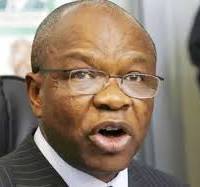
Maurice Iwu
This breakdown shows representation from South-South (2), South-East (1), North-West (1), and North-East (1), with no chairs from the South-West or North-Central regions, sparking speculation about potential candidates like Amupitan from Kogi in the North-Central region. Earlier, the Federal Electoral Commission (FEC) had chairs such as Eyo Ita Esua from Cross River in the South-South, who served from 1964 to 1966 under Balewa.
Implications of Presidents Appointing INEC Chairs in Nigeria
The constitutional vesting of appointment power in the President (Section 154) has profound implications for Nigeria’s democracy, often prioritizing political loyalty over neutrality. Key consequences include:
- Erosion of INEC’s Independence and Public Trust: The President’s role as nominator—after consulting the Council of State (which he chairs)—and the Senate’s confirmation (often controlled by the ruling party) creates perceptions of partisanship.This has led to controversies, such as the 2022 nomination of a partisan aide by Buhari, sparking CSO protests and petitions. Critics argue it enables executive influence over elections, as seen in disputed polls under Iwu (2007) and Yakubu (2019/2023), where allegations of rigging and delays fueled distrust.
- Risk of Electoral Manipulation and Instability: Appointees may face pressure to favor incumbents, perpetuating “do-or-die” politics. This has resulted in inconclusive elections, violence, and post-poll litigation, undermining voter confidence and deepening ethnic/regional divides. Tools like BVAS and IReV, while innovative, remain vulnerable without an impartial umpire.
- Broader Democratic and Developmental Setbacks: Biased appointments contribute to “fake democracy,” producing unaccountable leaders and sustaining poverty/underdevelopment, as rigged elections since 1960 have blocked merit-based governance. Internationally, it hampers Nigeria’s electoral credibility, deterring investment and aid.
Reforms like those proposed by CSOs could mitigate these by ensuring merit-based, transparent selections, but implementation requires political will amid 2027’s high stakes.
Nigeria’s Electoral History
Since its establishment, Nigeria has had six electoral bodies and 14 chairpersons, with one acting chairman. Six chairmen—Michael Ani, Eme Awa, Humphrey Nwosu, Okon Edet Uya, Sumner Dagogo Jack, and Ephraim Akpata—served under military regimes, with only Ani and Akpata overseeing transitions to civilian rule.
Under civilian administrations, Eyo Ita Isua, Victor Ovie Whiskey, Abel Guobadia, Maurice Iwu, Attahiru Jega, and Mahmood Yakubu led INEC, with Guobadia being the first to complete a full term.
Yakubu’s tenure was marked by efforts to modernize Nigeria’s electoral process, including the introduction of the Bimodal Voter Accreditation System (BVAS) and electronic result transmission. However, challenges such as logistical delays, voter suppression, and legal disputes persisted, fueling calls for electoral reforms.
Call for Electoral Reforms
As INEC prepares for a new chapter, Speaker of the House of Representatives, Abbas Tajudeen, has urged lawmakers to expedite ongoing electoral reforms ahead of the 2027 general elections. Speaking on Tuesday, October 7, 2025, Abbas emphasized that the Electoral Act Amendment Bill aims to address issues such as electoral violence, accessibility for persons with disabilities, and ambiguities in dispute resolution timelines.
“We must finalise electoral reforms well ahead of the 2027 general elections… to reduce the ambiguities that trailed the last elections,” he said, advocating for single-day voting and transparent party primaries to make elections less contentious and costly.
As Nigeria awaits the announcement of Yakubu’s successor, the nation’s democratic institutions face the task of building on his legacy while addressing persistent challenges.
The new INEC Chairman will inherit a commission at a critical juncture, with the 2027 elections looming and public expectations for credible, transparent polls at an all-time high. Whether Amupitan, Liman, or Olurode takes the helm, their leadership will shape the future of Nigeria’s electoral landscape.
For now, Mrs. May Agbamuche-Mbu steers INEC in its interim phase, ensuring continuity as the nation prepares for the next chapter in its democratic journey.
Read Also: Rise and fall of electoral chairmen in Nigeria (1964-2023)
Author

Sign up for The Insight Newsletter
Get in-depth, research and data-based interpretative reports from around Nigeria.


