
How Some Countries Effectively Police Their Forests: Lessons for Nigeria

By Emmanuel Kwada
Nigeria’s vast forests, once symbols of biodiversity and rural livelihoods, have tragically transformed into deadly strongholds for bandits, kidnappers, illegal loggers, and in some cases, terrorist affiliates.
These ungoverned spaces; spanning notorious areas like Sambisa Forest in Borno, Kamuku National Park across Kaduna and neighboring states, Dajin Rugu corridor in the northwest, Old Oyo Forest Reserve in the southwest, and emerging hideouts in Kwara, Benue, Plateau, Nasarawa, Ondo, and Edo enable criminals to establish camps, hold hostages, launch raids, conduct cattle rustling, and evade security forces.
The scale is staggering: dense, remote terrains with limited roads and surveillance allow impunity, fueling kidnappings (often mass abductions for ransom), killings, and displacement.
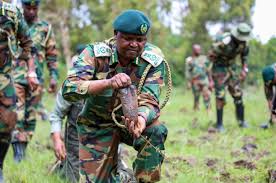
Kenya Forests Service.
Government responses through military operations like “Forest Flush,” occasional raids, and deployments haven’t achieved much successes as the nation struggle against the sheer expanse, criminal mobility, and root issues like poverty, weak governance, and corruption.
Sporadic efforts by forest guards and agencies have been undermined by inadequate resources and coordination.
Yet, global examples offer proven pathways to reclaim such spaces. Countries facing similar challenges vast forests exploited for crime, deforestation, and insurgency have succeeded through integrated strategies blending technology, dedicated enforcement, community empowerment, legal reforms, and multi-agency coordination.
Brazil reversed massive Amazon deforestation (linked to crime, violence, and land conflicts) via satellite-driven monitoring and aggressive policing. INPE’s PRODES delivers precise annual deforestation data, while DETER provides near-real-time alerts on clearing, fires, and changes.
Forests can be secured when threats are met with innovation, resolve, and inclusivity—not just force.
These empower IBAMA (environmental police) to launch rapid operations; helicopters, boats, 4x4s—for inspections, fines, seizures, embargoes, and prosecutions under the PPCDAm plan.
This intelligence-led model slashed rates dramatically in the 2000s-2010s, disrupted economic incentives, and even reduced associated homicides by expanding state presence.
Indonesia curbed illegal logging and palm oil expansion through a (now permanent) moratorium on new permits for primary forests and peatlands, backed by dedicated Forestry Police and brigades for investigations, arrests, permit revocations, and network targeting (including facilitators and corrupt elements).
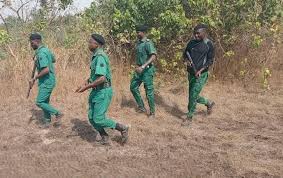
Nigeria Forest Guards
While challenges like legal clearing persist, it has reduced some illicit activities and improved governance.
Kenya leverages mobile technology and community involvement. The Kenya Forest Service app merges satellite feeds, global maps, and real-time reports to flag fires, illegal logging, and encroachments.
Rangers and locals (including during COVID) respond swiftly to alerts (offline-capable), enabling targeted patrols and evidence collection in remote areas.
Bhutan enshrines protection constitutionally: the 2008 Constitution mandates at least 60% forest cover perpetually, declaring every citizen a “trustee” of natural resources. Strict laws (e.g., Forest and Nature Conservation Act), community programs, and monitoring sustain over 70% cover today.
The Gambia succeeds with community-driven management. Its Community Forest Policy transfers rights and revenue shares (from sustainable uses like eco-tourism or regulated harvesting) to locals, who form committees and protect against exploitation—fostering self-sustaining guardianship without heavy external aid.
With sustained political will, funding, anti-corruption safeguards, and inclusive rollout, Nigeria can reclaim its forests.
United States targets demand via the Lacey Act (2008 amendments), banning trade in illegally sourced timber/plants. It requires supply-chain due care, declarations, and enforcement through seizures, fines, and prosecutions (including felonies), reducing illegal wood imports by 32–44% and hitting criminal profits.
Switzerland enforces total bans on deforestation/clear-cutting under the Federal Act on Forests, with decentralized (cantonal) policing and deep civil society integration in planning and conflict resolution for balanced, multifunctional use.
Rwanda pursues broad enforcement in its National Forest Policy, including strict prohibitions on harmful products like polythene tied to awareness, inspections, penalties, and national restoration drives.
Turkey centralizes authority under the Ministry of Agriculture and Forestry for unified management against fires, pests, illegal acts—using labs, early warnings, biological controls, and rapid interventions.
Partner for affordable satellite like DETER-style real-time alerts and drone monitoring of hotspots.
Norway leads globally via NICFI and LEAP (with INTERPOL/UNODC), funding intelligence-led, multi-agency operations to disrupt tropical forest crime networks worldwide.
These successes prove that forests can be secured when threats are met with innovation, resolve, and inclusivity—not just force.
To deny bandits and criminals sanctuary, restore security, protect ecosystems, and build community prosperity, Nigeria should urgently adopt a blended, phased approach:
- Launch high-tech surveillance: Partner for affordable satellite like DETER-style real-time alerts and drone monitoring of hotspots (Sambisa, Kamuku, Dajin Rugu, Old Oyo, Kainji), integrated with apps for community reporting (Kenya model) to enable proactive raids by NFSS, military, and rapid units.
- Establish specialized, intelligence-driven enforcement: Expand NFSS into a professional forestry security force with training, arms, and focus on dismantling networks (Indonesia/Brazil style) arrests, asset seizures, permit revocations in moratorium zones (temporary bans on unregulated grazing/mining/logging in bandit corridors).
- Empower communities as owners and guardians: Implement community forestry policies (Gambia/Bhutan-inspired) granting legal stakes, revenue shares from sustainable activities (eco-tourism, regulated harvesting), and trustee roles—turning residents in Benue, Kwara, Plateau, Nasarawa into informants and protectors.
- Impose market and legal deterrence: Enact traceability laws (Lacey Act model) for forest products, ban unchecked clearing in hotspots (Switzerland/Rwanda), and pursue international partnerships (Norway LEAP) for cross-border intelligence and ops.
- Centralize and coordinate: Strengthen unified command under a dedicated agency/ministry (Turkey style) for multi-agency ops, with pilots in northwest/southern reserves building on existing NFSS guards.
With sustained political will, funding, anti-corruption safeguards, and inclusive rollout, Nigeria can reclaim its forests—saving lives, curbing violence, preserving biodiversity, and fostering sustainable growth. The global evidence is clear: transformation is achievable. The time for bold implementation is now. Would you like details on advanced tracing tech like DNA markers or blockchain for timber?
Success requires political will, funding, anti-corruption measures, and addressing socio-economic drivers (poverty, unemployment).
By learning from Brazil’s tech edge, Kenya’s community integration, and others’ enforcement models, Nigeria can transform deadly ungoverned spaces into secured assets—enhancing national security, protecting biodiversity, and fostering rural development.
The time for urgent, coordinated reform is now; continued inaction risks further entrenching criminal empires in the nation’s green heartlands.
Read Also:11 Most Dangerous Forests in Nigeria Infested with Deadly Criminals
Author

Sign up for The Insight Newsletter
Get in-depth, research and data-based interpretative reports from around Nigeria.


