
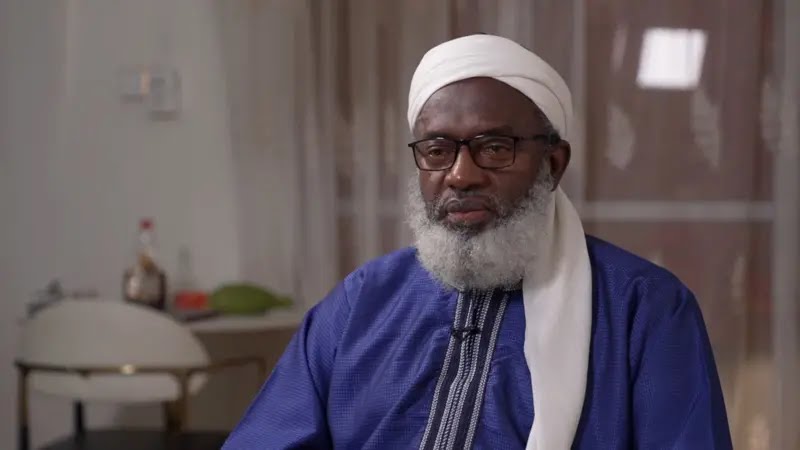
Gumi: A Sheikh above the law in Nigeria
By Emmanuel Kwada
This week in Nigeria unfolded with gripping debates, bold accusations, and renewed calls for action as insecurity, governance failures, and regional tensions dominated the national mood. Sheikh Ahmad Gumi’s controversial claim that the Nigerian Army “cannot defeat bandits” fuelled nationwide outrage and intensified demands for a Northern reawakening—echoed by IBB, Prof. Ango Abdullahi, Gbenga Hashim, and others alarmed by worsening insecurity and deepening poverty.
Emir Muhammadu Sanusi II added a stinging rebuke, warning that public office has become a “family business,” choking national progress.
Amid these concerns, President Tinubu came under fire for swiftly dispatching troops to Benin Republic while bandits continue to operate freely across Nigerian communities.
In the Middle Belt, U.S. lawmakers sounded a genocide alarm after visiting 600,000 displaced persons in Benue. The Army also denied shooting protesting women in Adamawa, despite eyewitness claims.
Dive into this week’s edition for full details, deeper insights, and the stories shaping Nigeria’s future.
Sheikh Gumi’s Remarks Spark Fresh Outrage
Islamic cleric Sheikh Ahmad Gumi has once again stirred nationwide anger after declaring that the Nigerian Army is incapable of defeating the country’s armed bandit groups, insisting that no military operation can end the growing insecurity ravaging the northwest and beyond.

Photo Shows Sheikh Ahmad Gumi Amidst Bandits. Photo Credit: Online
In an exclusive BBC interview, Gumi claimed that guerrilla fighters are impossible for any modern army to eliminate through force, a remark many Nigerians see as both discouraging and suspicious.
“But even the military says that in dealing with this civil unrest and criminality, only 25% is kinetic action; the rest depends on the government, politics, and local communities. The military cannot do everything,” he said.
“Where have you ever seen the military defeat guerrilla fighters? Nowhere.”
His statements, coming at a time when the Federal Government is introducing sweeping reforms to restore national security, have drawn widespread condemnation, with Nigerians questioning why the controversial cleric continues to make provocative claims without facing investigation.
Where have you ever seen the military defeat guerrilla fighters? Nowhere.
For years, Gumi has been criticised for comments many believe downplay the atrocities of bandit groups. In the past, he claimed that kidnapping schoolchildren was a “lesser evil” compared to killing soldiers, a statement that triggered national outrage.
He also accused security operatives of “excessive force” against bandits, often framing the criminal groups as misunderstood or pushed to violence by circumstances. Critics argue that his comments consistently appear sympathetic toward the very groups responsible for mass killings, kidnappings, and the destruction of rural communities.
Why authorities have never thoroughly interrogated Gumi despite his repeated controversial interventions in sensitive security matters.
With his new declaration that the Nigerian Army “cannot defeat bandits,” many Nigerians fear he is once again amplifying narratives that embolden armed groups.
Nigerians Ask: Why Has Gumi Never Been Questioned?
As public anger grows, many citizens are openly asking why authorities have never thoroughly interrogated Gumi despite his repeated controversial interventions in sensitive security matters.
How has a civilian cleric gained such deep access to bandit enclaves in the past?
Why is he always able to speak authoritatively on bandit motives, operations, and structures?
Why do his comments often appear to align with narratives pushed by the criminals themselves?
And most importantly, why has he never been invited by security agencies for questioning?
Social media commentators argue that someone who openly visited bandit camps and defended their actions should not be treated as an untouchable figure.
Responding to the accusations, Gumi insisted he has had no contact with bandit leaders since 2021, the year the federal government officially designated them as terrorists.
“I never went there alone. It was in 2021 when I was trying to see how we could bring them together. But the government at the time was not interested,” he said.
“They declared them terrorists, and since that time we have completely disengaged.”
Still, many Nigerians remain unconvinced, considering how frequently he comments with unusual confidence on the motives, grievances, and operations of armed groups.
In the BBC Hausa interview, Gumi went further, alleging that powerful foreign actors may be backing the armed groups terrorising Nigeria.
“From the nature of their weapons, we realised they receive foreign support,” he said, suggesting that external interests may be escalating the crisis.

Bandits kidnapped victims in Zamfara forest
He argued that the recent resurgence of attacks — especially on the Abuja–Kaduna highway and in Birnin Gwari — came shortly after international discussions involving Nigeria. According to him, this pattern indicates “foreign fingerprints” on local violence.
These claims, while alarming, have also raised eyebrows. Critics argue that Gumi frequently offers explanations that appear to shield bandits from full blame.
Defending Bandits as “Fulani Herdsmen in an Existential War”
Gumi again described the armed groups as Fulani herdsmen fighting an “existential war” due to threats to their cattle-rearing lifestyle.
“They want to exist. That is their life,” he said.
IBB, Others Call for Northern Reawakening Amid Rising Insecurity, Extreme Poverty
In a rare convergence of elder statesmen, former heads of state, governors, traditional rulers, business leaders and civil society voices, Northern Nigeria has been confronted with an unequivocal demand for moral, political and developmental reawakening.
Former Military President General Ibrahim Badamasi Babangida (rtd), presidential aspirant Dr Gbenga Hashim, Professor Ango Abdullahi, Professor Abubakar Siddique Mohammed, former Vice President Atiku Abubakar, Africa’s richest man Aliko Dangote and serving governors have all, within the space of weeks, issued stark warnings: the region’s elite must urgently rediscover the virtues of humility, selfless service, accountable governance and intra-regional unity or watch the North descend into irreversible chaos characterised by rampant banditry, mass abductions, and extreme poverty.
General Babangida Invokes Hassan Katsina’s Legacy as Moral Compass
Speaking through his representative, Colonel Lawal Gwadabe (rtd), at the 2nd General Hassan Usman Katsina Memorial Symposium in Kaduna, General Ibrahim Badamasi Babangida described the late former Military Governor of the Northern Region as the embodiment of everything the contemporary North has lost.

Former Military President General Ibrahim Badamasi Babangida (rtd)
“General Hassan Katsina was born into royalty yet lived with edifying humility, correctness and undisturbed serenity,” Babangida stated. “He was just, humane, temperate and very sincere – qualities that appear in short supply today.”
Babangida particularly praised Katsina’s post-retirement devotion to educational reform and the modernisation of the Almajiri system, noting that the late general “devoted all his time to be the voice of the poor and to fight for their education and emancipation.”
He urged the current crop of leaders to allow Katsina’s legacy to “rekindle our nostalgia for the development of Arewa” and “galvanise them into decisive action to reverse the challenges militating against the overall socio-economic development of Northern Nigeria.”
The security and welfare of the people shall be the primary purpose of government.
The former president concluded that Katsina remained “an honest and comprehensive statesman whose silent judgement of time has vindicated him,” implicitly contrasting his modest lifestyle with the ostentatious living of many present-day office holders.
Professors Ango Abdullahi and Abubakar Siddique Mohammed, both speaking at the same event, reinforced the message.
Professor Abdullahi reminded the audience of the sacrifices made by Katsina and other founding fathers “to keep Nigeria united and the Northern Region prosperous,” while Professor Mohammed, Executive Director of the Centre for Democratic Development Research and Training (CEDDERT), described the current moment as “a dangerous convergence of socio-economic and security challenges that threaten the very existence of Nigeria as a corporate entity.”
He quoted Section 14(2)(b) of the 1999 Constitution: “The security and welfare of the people shall be the primary purpose of government.”

His Royal Highness Ambassador Ahmad Nuhu Bamalli CFR, Emir of Zazzau at the 2nd General Hassan Usman Katsina Memorial Symposium in Kaduna
Dr Gbenga Hashim’s Blunt Indictment: “Replace Leaders Living Like Oil Sheikhs”
Perhaps the most incendiary intervention came from businessman and presidential aspirant Dr Gbenga Hashim, whose statement on Sunday pulled no punches.
Dr Hashim traced the ability of criminal and extremist groups to recruit “thousands of foot soldiers” directly to “decades of governance failure at state and local government levels that have produced deep, structural poverty.”
While acknowledging the spillover effects of the Sahel crisis, he insisted that “poor local governance has compounded the problem beyond measure.”

Group photograph of northern elders at the 2nd General Hassan Usman Katsina Memorial Symposium in Kaduna
Contrasting the austere, people-centred leadership of First Republic icons – Sir Ahmadu Bello, Mallam Aminu Kano, Joseph Tarka and Sir Kashim Ibrahim – with the present reality, Hashim declared:
“Today, too many of our leaders live like oil sheikhs in the midst of mass poverty, while holding on to power through ethnic and religious manipulation. It is time for the North to replace such leaders.”
He welcomed the appointment of General Christopher Gwabin Musa as Minister of Defence but warned that Nigerians “are running out of patience with political promises.” He demanded immediate, visible results and called on the National Assembly to fast-track legislation establishing state and community policing architectures.
Today, too many of our leaders live like oil sheikhs in the midst of mass poverty, while holding on to power through ethnic and religious manipulation.
Northern Governors and Emirs Declare “State of Emergency”
The most institutional response came on 1 December when the Northern States Governors’ Forum (NSGF) and the Northern Traditional Rulers Council held a joint emergency summit in Kaduna. In a strongly worded communiqué signed by NSGF Chairman and Gombe State Governor, Muhammadu Inuwa Yahaya, the leaders declared a “state of emergency on insecurity and poverty,” warning that the region stands “at a dangerous crossroads.”
Governor Yahaya stated bluntly: “We must act now or lose the North forever.” The summit announced concrete measures, including:
A commitment by each of the 19 northern states to contribute ₦1 billion monthly to a Regional Security Trust Fund;
A six-month suspension of all artisanal and small-scale mining activities to disrupt the financing of banditry;
Renewed advocacy for constitutional amendment to establish state police.
Kaduna State Governor Uba Sani decried the politicisation of insecurity, while Adamawa’s Ahmadu Umaru Fintiri described a secure North as “a collective responsibility we must confront with courage and clarity.”
Read Also: Northern Governors, Traditional Rulers’ Kaduna Summit: Full Inside Account
At the Arewa Consultative Forum’s silver jubilee in November, former Vice President Atiku Abubakar described the gathering as “a wake-up call,” warning that without tackling population growth, food insecurity, educational collapse and youth unemployment, “the North will stagnate and sink deeper into poverty and violence.”

Former Vice President Atiku Abubakar
Aliko Dangote, speaking at the same event, demanded an end to “policy somersaults” and the creation of a long-term economic blueprint anchored on education, agriculture and industrialisation.
Former Senator Shehu Sani and several civil society leaders have equally pointed to the Almajiri phenomenon, mass illiteracy and youth disempowerment as the fertile soil in which violence grows.
Emir Sanusi Blasts Nigeria’s Elite: Public Office a ‘Family Business’ Stifling National Dreams
The 16th Emir of Kano, Muhammadu Sanusi II, lambasted leaders for transforming public office into a “family enterprise,” a self-serving racket that squanders the nation’s vast potential and perpetuates cycles of missed opportunities.
Delivering a impassioned keynote at the 15th anniversary of Enough is Enough (EiE) Nigeria in Lagos, Sanusi, the erudite former Central Bank of Nigeria governor, painted a grim portrait of governance warped by personal greed.
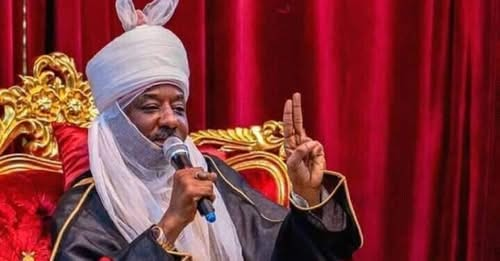
Emir of Kano, Muhammadu Sanusi II
“We have done enough damage and maybe we need to stop,” he declared, invoking the event’s theme of accountability. “This is the point Omobola is making about missed opportunities. Not just missed opportunities, I think sometimes deliberately missed opportunities.”
At the heart of his critique: a leadership elite that views power not as stewardship for 220 million citizens, but as a private fiefdom for kin and cronies.
“The reason we miss these opportunities is because we have people who think public office is about themselves, it’s about their families, it’s about people close to them, it’s not about the country,” Sanusi thundered. “But public office is about the citizens.”
We have done enough damage and maybe we need to stop.
Sanusi, whose own tenure at the CBN from 2009 to 2014 was marked by bold reforms and clashes with the establishment, urged Nigeria’s youth the demographic bulge driving EiE’s activism to dismantle this entrenched dysfunction.
He spotlighted how ethnic fault lines, religious schisms, and raw ambition have hijacked the federation, derailing unity and progress.
“The important thing for me is that as citizens, each and every one of us will remember that the nation belongs to us,” he emphasized.
“It does not belong to the government, it does not belong to politicians, it belongs to us. We own this country and wherever we find ourselves, we must remember that we are holding one small part of Nigeria and we have a duty to do what we must, to contribute our own quota to this country.”
The important thing for me is that as citizens, each and every one of us will remember that the nation belongs to us.
“What we need to do is try to come together and articulate a clear and achievable ideological position, a vision for what kind of Nigeria we want to have.”
Rejecting the “manufactured” narrative of division and “competition for aggrandizement,” Sanusi envisioned a Nigeria that “realises its potential in the committee of nations”—a beacon of innovation, equity, and global stature.
Crush Bandits First: Nigerians Lambast Tinubu for Deploying Troops, Jets to Benin While Bandits Operate Freely
President Bola Ahmed Tinubu’s swift deployment of Nigerian troops and fighter jets to suppress a coup attempt in neighbouring Benin Republic has triggered widespread outrage across Nigeria, with citizens, civil society organizations (CSOs) and opposition parties accusing the administration of prioritizing foreign interventions over the escalating insecurity at home.
The backlash erupted after the dramatic events of Sunday, December 7, when renegade Beninese soldiers loyal to Lt. Col. Pascal Tigri launched coordinated attacks on President Patrice Talon’s palace and seized the national television station, declaring a military takeover.
Responding to President Talon’s urgent plea, Tinubu authorized rapid military intervention, including airstrikes on rebel-held locations such as the state broadcaster headquarters and Camp Togbin.
Backed by forces from Côte d’Ivoire, Ghana and Sierra Leone, Nigerian troops swiftly dismantled the mutiny and restoring order. The Nigerian Senate later granted retroactive approval, saying the intervention was necessary to protect regional stability and prevent cross-border security spillovers.
However, the display of “rapid military precision” has provoked harsh criticism at home.
CSOs accused the National Assembly of rubber-stamping an operation that diverts scarce resources abroad while terrorists, kidnappers and bandits operate with near impunity across Nigeria.
Critics argue that the same urgency used to defend Benin has been conspicuously absent in tackling worsening insecurity in states such as Kaduna, Niger, Zamfara, Kwara, Plateau and the FCT.
The African Democratic Congress (ADC), while acknowledging the swift response in Benin, condemned President Tinubu’s failure to demonstrate similar resolve within Nigeria’s borders.
“A government that acts swiftly abroad must do so decisively at home,” the party said, questioning the absence of such decisiveness in recent attacks and kidnappings.
The ADC further recalled the administration’s noncommittal stance during turbulence in Guinea-Bissau, describing Nigeria’s foreign interventions as inconsistent and politically selective.
The African Action Congress (AAC) issued an even sharper rebuke, branding the Benin operation “selective bravado” aimed at projecting regional power while Nigerians are left to “face kidnapping, killings and terror with impunity.”
HURIWA also criticized the government’s celebratory tone, calling it insensitive at a time when communities are still mourning victims of banditry and insurgency.
The public anger spilled onto social media, where many Nigerians questioned the government’s priorities.
“So, Tinubu deployed fighter jets to Benin Republic to go & counter the military takeover but Tinubu cannot deploy fighter jets to those areas where Bandits are k!lling innocent people of Nigeria. To those people supporting Tinubu, shame on you.” pic.twitter.com/vhS6qyTiQC
— Dr. Kenon (@drkenon2) December 7, 2025
Nobel laureate Prof. Wole Soyinka mocked the intervention, suggesting President Tinubu could have simply deployed his son Seyi’s “battalion-sized” personal security entourage instead of mobilizing national military assets—an indication of growing frustration over perceived elite detachment from public suffering.
ECOWAS Commission President Omar Touray framed the intervention within the context of rising coups and jihadist threats across West Africa, saying Nigeria acted in the region’s collective interest.
Yet, as Nigerian forces continue mop-up operations in Benin, the political heat at home intensifies. Citizens and stakeholders argue that President Tinubu must prove that his government is not more committed to defending foreign democracies than securing its own people.
Genocide Alert: U.S. Lawmakers on Fact-Finding Mission in Nigeria Expose Plight of 600,000 in Benue IDP Camps
A high-level U.S. congressional delegation, led by Congressman Riley Moore, has wrapped up a gripping fact-finding mission in Nigeria’s Benue State, spotlighting what they term a “genocidal campaign” against Christians that has forced over 600,000 into squalid Internally Displaced Persons (IDP) camps.

U.S. Congressman Riley Moore with his team visited Benue State as part of a fact-finding delegation
The five-member team arrived Sunday, traversing volatile areas in armored vehicles to visit IDP sites, engage survivors of terrorist attacks, and confer with Christian leaders, bishops, and traditional rulers.
Moore, visibly moved, recounted harrowing testimonies: one woman escaped after witnessing her husband and five children’s slaughter, delivering her baby in a camp; another lost her family and had her unborn child ripped from her womb; a man survived a machete attack that mangled his arm while his loved ones perished.
“These Christians should be able to live in their ancestral homeland without fear of genocidal Fulani,” Moore declared, rejecting narratives of climate or economic clashes and insisting the violence aims to erase Christian communities.
The delegation noted assaults even on IDP camps and churches, underscoring a targeted religious purge.
These Christians should be able to live in their ancestral homeland without fear of genocidal Fulani
Meetings with Nigeria’s National Security Adviser Nuhu Ribadu and Attorney General Lateef Fagbemi highlighted the mission’s diplomatic weight. The visit follows President Donald Trump’s late October designation of Nigeria as a “Country of Particular Concern” for severe religious freedom violations, amid U.S. congressional hearings on the mass killings.
The group plans a high-level briefing for Trump by month’s end, collaborating with House Appropriations Chairman Tom Cole on a comprehensive report. Amid Nigerian government denials, Moore warned of potential U.S. military intervention if the bloodshed persists, urging global scrutiny to avert further humanitarian catastrophe.
Nigerian Army Denies Fatal Shooting of Adamawa Women Protesters Despite Eyewitness Accounts, Video Evidence
The Nigerian Army has vehemently rejected accusations that its troops opened fire on unarmed women protesters in Adamawa State, killing at least nine and wounding ten others, despite video evidence, mounting eyewitness testimonies and calls for an independent probe from Amnesty International, which labels the incident a stark example of unchecked military excesses.
The clash erupted in the early hours of Monday, December 8, in Lamurde Local Government Area, a hotspot for simmering ethnic tensions between the Bachama and Chobo communities over longstanding land disputes and resource conflicts.
What began as a communal flare-up—rooted in earlier attacks dating back to July, including village burnings and fatalities—escalated when a group of women, wielding only tree leaves as symbols of peace, took to a major road to decry the military’s allegedly biased and sluggish response to the violence.

Peaceful protesters demonstrate against the killing of innocent women in Adamawa state
Protesters blocked the path of advancing soldiers, accusing them of favoring one side and failing to enforce a freshly imposed 24-hour curfew meant to quell the unrest.
Eyewitnesses paint a harrowing picture of the confrontation. “These soldiers were leaving where the conflict happened, and they came to pass through this place. They came and met the women protesting when one of the soldiers shot his gun in the air. After that, they opened fire on the women,” recounted Gyele Kennedy, a local whose daughter was among the slain.
Relatives and survivors corroborated the account, insisting the women were peaceful and unarmed, with the gunfire erupting without warning.
Amnesty International, drawing from these testimonies, confirmed the toll: nine dead and ten injured, blasting the response as “unlawful and excessive use of force.”
The rights group demanded a “transparent and impartial investigation,” warning that such tactics echo Nigeria’s troubled history of military abuses, including the 2020 Lekki Toll Gate massacre.
Director Isa Sanusi of Amnesty Nigeria added, “It shows that the Nigerian military has not changed much because of its past record of human rights violations and disregard for rule of law.”
In stark contrast, the Headquarters of the 23 Brigade Nigerian Army issued a swift denial on Tuesday, labeling the reports “baseless, unfounded, and intended solely to smear the Brigade, its Commander, and by extension the Nigerian Army.”
Captain Olusegun Abidoye, Acting Assistant Director of Army Public Relations for Sector 4 Operation Hadin Kai, clarified that troops—deployed alongside police, NSCDC, and DSS—responded to distress calls around 1:30 a.m. amid militia attacks.
The army insists no civilians were targeted; instead, soldiers neutralized three gunmen in self-defense, later discovering additional militia casualties. The two women found dead (a lower figure than claimed by others) were attributed to “unprofessional handling of automatic weapons by the local militias who are not proficiently trained.”
Notably, Brigade Commander Amechi Agwu was absent from the scene, attending a virtual Chief of Army Staff briefing. The military urged communities to “embrace peace” and dismissed the allegations as malicious misinformation spread by online platforms.
The Bwatiye Youth Wing, representing the Bachama ethnic group, condemned the alleged shootings as “unprofessional and unjustifiable,” demanding justice for what they tallied as at least nine deaths and numerous injuries. Local councillor Lawson Ignatius echoed frustrations over the curfew’s uneven enforcement, which protesters argued exacerbated the chaos.
JUST IN – Video of VDM visited Lamurde in Adamawa state, where the Nigerian Army reportedly shøt and kÎllēd eight women and 2 men who were protesting on Monday
https://t.co/m7EkXrClDf— Daily Media™ (@Divine0237) December 10, 2025
Fresh protests erupted in nearby Numan on Tuesday, fueled by outrage over the killings, as Governor Ahmadu Fintiri’s administration grapples with restoring order.
Amnesty criticized the government’s “inadequate, too slow and ineffective” response to the underlying ethnic strife, warning that without addressing root causes—like land grievances and motorcycle thefts turned deadly—the cycle of violence will persist.
Read Also: Shedding of Innocent Blood is Over, We Have No Time – New Defence Minister Declares
Author

Sign up for The Insight Newsletter
Get in-depth, research and data-based interpretative reports from around Nigeria.

